Portable Air Cooler Guide: Everything You Need to Know, in 8 Short Sections
The Short Answer
A portable air cooler is a small evaporative cooler: a fan blows warm air through a wet pad, the water evaporates and the air comes out cooler, with no compressor, no hose and no installation. It works best in dry air and cools the space right around you (your bed, desk or sofa) rather than the whole house. This page is the map of the whole topic: each short section below gives you the essentials and links to the article on our blog that goes deeper. If you just want the cooler we recommend, see our AiraBreeze review.
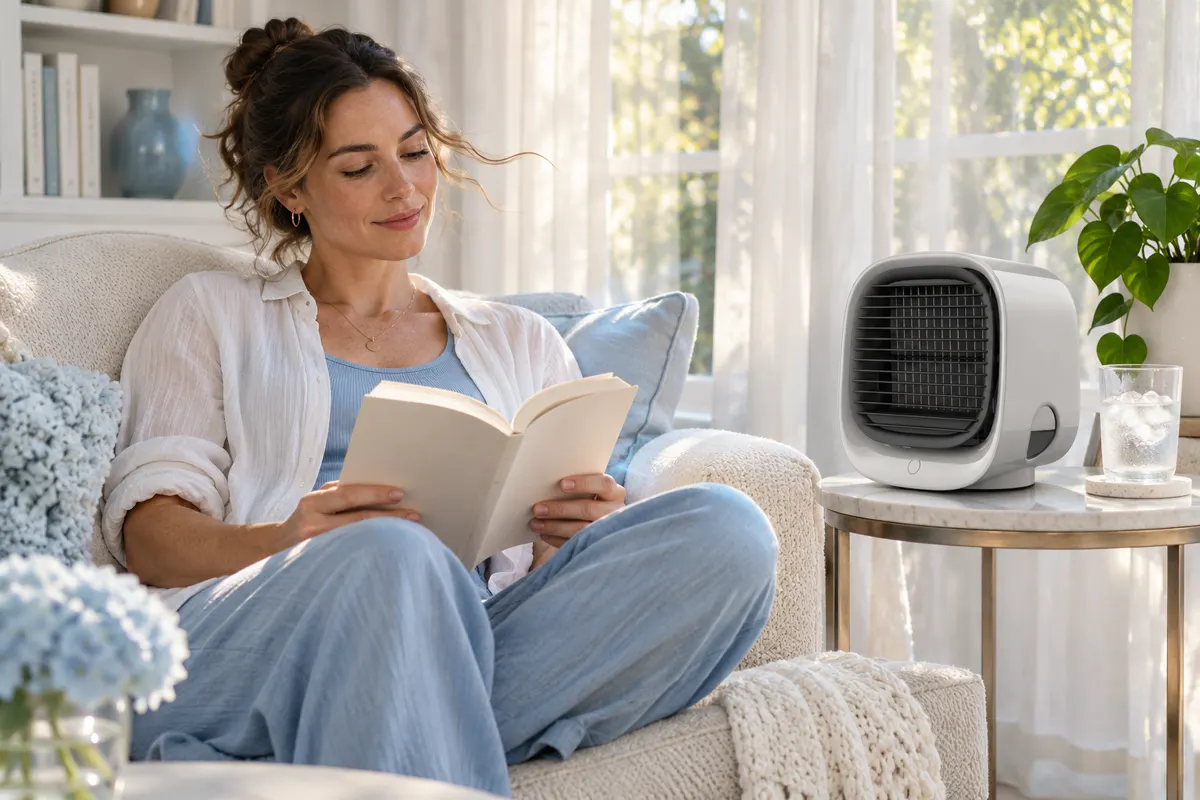
We have written more than 20 articles about staying cool at home, from the physics of evaporation to hot upstairs bedrooms and stuffy offices. That is a lot to dig through, so this guide puts the whole subject in order. Read it top to bottom in about nine minutes, or jump to the part you care about and follow the link to the full answer.
1. How a Portable Air Cooler Works
Every evaporative cooler does the same simple thing: it turns heat in the air into water vapor. A fan pulls room air across a pad or filter soaked from a small water tank. As the water evaporates it absorbs heat, so the air that leaves the front grille is cooler and a little more humid than the air that went in. There is no refrigerant and no heat being pushed outside, which is why these units need no window kit and use only a small amount of power.
It is an old idea, too: people cooled rooms with wet cloths and porous water jars long before electricity. Go deeper: Do evaporative air coolers actually work? The honest answer and the history of evaporative cooling.
2. How Much Cooler the Air Gets
The answer depends mostly on one thing: how dry your air is. Dry air can absorb plenty of water, so the cooling effect is strong; humid air is already close to full, so the drop is smaller. The useful number is the gap between your room temperature and the “wet-bulb” temperature, which you can find from a cheap thermometer-hygrometer. A good cooler closes roughly half to four-fifths of that gap in the air it blows out.
Remember that this is the temperature of the airflow, which is what you feel at your bed or desk. Go deeper: How much does an evaporative cooler cool? Do the math in 3 steps.
3. Portable Air Cooler vs. Air Conditioner vs. Fan
| Option | How it cools | Best for |
|---|---|---|
| Fan | Moves air across your skin; does not lower air temperature | Mild days, cheapest to run |
| Portable air cooler | Evaporation lowers the temperature of the airflow | Personal cooling at a bed, desk or sofa, dry heat, rooms without AC |
| Air conditioner | Refrigerant compressor removes heat and humidity | Cooling whole rooms or homes in very humid heat |
A cooler sits in the sweet spot between the two: real cooler air where you are, with no installation and a fraction of the running cost of AC. The U.S. Department of Energy notes in its Energy Saver 101 guide to home cooling that an evaporative cooler uses a fraction of the energy of a central air conditioner. Go deeper: Portable air cooler vs. air conditioner vs. fan and does the DIY ice-bowl trick work?
4. How to Choose the Right Type
Size the cooler to the job, not to the biggest room in your house. A compact personal cooler is made for one person at close range; tower and big swamp coolers are for larger spaces; window and whole-house units are for dry-climate homes that want to cool everything. Before buying, check the tank size (hours per fill), the number of fan speeds, noise on the lowest setting, how easy the tank is to fill and clean, and the return policy.
Go deeper: How to choose a portable air cooler: 7 things to check and mini air cooler vs. tower vs. window cooler.
5. How to Use It for Colder Air
Most people who feel underwhelmed by a cooler are using it in the wrong spot. Place it close (within a few feet) and aim it at your upper body, start with cold water and add ice on the hottest afternoons, and leave a door or window slightly open so the moist air does not build up. Run the fan on high for a quick cool-down, then drop to low for steady, quiet comfort.
- Close beats powerful. A small cooler two feet away feels better than a big one across the room.
- Cold water first. Ice gives you a colder first blast; evaporation does the rest.
- Let the air move. A little cross-ventilation keeps the cooling effect strong.
Go deeper: How to use a portable air cooler: 9 tips for colder air.
6. Bedrooms and Better Sleep
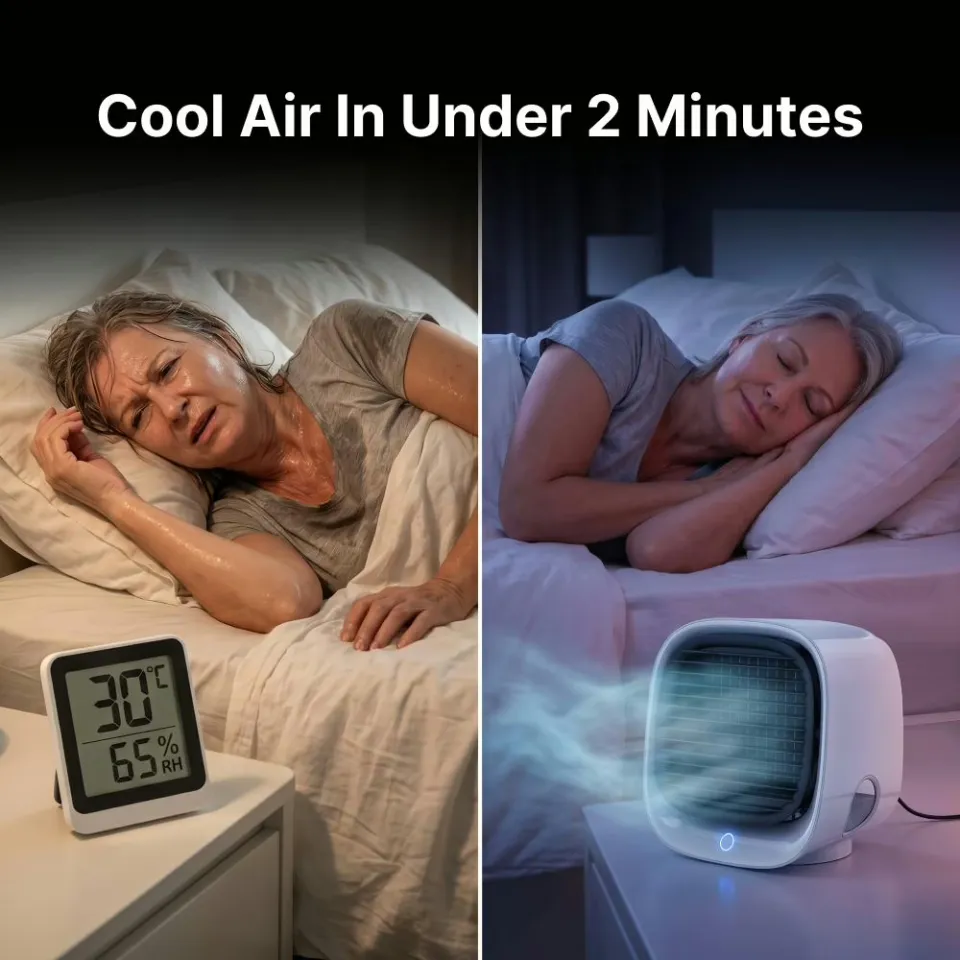
A hot bedroom is the most common reason people buy a personal cooler. Sleep experts generally suggest a cool bedroom (many sources cite around 65°F as a starting point), and a cooler on the nightstand lets you cool your side of the bed without chilling the whole house. It is quiet on low, it runs through the night on one fill, and it can help in situations where one partner sleeps hot or night-time hot flashes make the room feel stuffy.
Go deeper: the best temperature for sleeping, 7 signs your bedroom is too hot to sleep, is it safe to sleep with an air cooler on?, hot sleeper, cold sleeper and fan vs. air cooler for hot flashes.
7. Problem Rooms and Situations
Some spaces stay warm no matter what the thermostat says: upstairs bedrooms, heated apartments, a kitchen during a big cooking day, a home office packed with electronics, or a baby’s room you do not want to over-cool. A personal cooler is the flexible fix because it goes where the heat is. When the AC fails or you are staying somewhere without it, it bridges the gap.
Go deeper: how to cool a hot room (if-then guide), why is my upstairs so hot?, why is my apartment so hot in winter?, staying cool at your desk, a hot kitchen while cooking, keeping a baby’s room cool, AC stopped working? and staying cool when traveling.
8. Cleaning, Storage and Winter Use
A cooler stays fresh with a simple routine: empty the tank instead of topping it up, rinse the tank and pad about once a week when you use it a lot, and let everything dry fully before you put it away. In winter it does not have to go in the closet. Forced-air heating dries indoor air, and a personal evaporative cooler on a low setting adds a little moisture while keeping a warm, stuffy room comfortable.
Go deeper: how to clean and store a portable air cooler, can an evaporative cooler be used as a humidifier? and how to stay cool at home without air conditioning.
Our Recommendation: AiraBreeze
Put every section of this guide together and the ideal portable air cooler looks like this: small enough to sit right next to you, quiet enough for the bedroom, a tank that lasts the night, and nothing to install. That is exactly what AiraBreeze was built for, and it is the personal cooler we recommend. It cools, filters and humidifies the air around you and is rated for spaces up to 215 sq ft.
- Noticeable cooling in about 90 seconds: fill, plug in, press the button.
- Up to 8 hours per fill: a full night or a work day.
- 3 fan speeds: high for a quick cool-down, low for quiet sleep.
- Add ice for extra-cool air on the hottest afternoons.
- Adds gentle moisture to rooms dried out by winter heating.
- Light and portable: nightstand at night, desk by day, sofa on weekends.
Owners rate it 4.7/5 across 1,888+ reviews, and 97% say they would recommend it. The official site currently offers 75% OFF, and every order is covered by a 30-day money-back guarantee. It is a personal and small-room cooler, not a replacement for central air, and that focus is what makes it so effective where you actually sit and sleep. Read our full AiraBreeze review for specs and owner feedback.
Frequently Asked Questions
What is a portable air cooler?
A portable air cooler is a small evaporative cooler: a fan pulls warm air across a water-soaked pad or filter, the water evaporates and the air comes out cooler and slightly more humid. It has no compressor, no refrigerant and no exhaust hose, so it plugs in and works without installation.
Is a portable air cooler the same as a portable air conditioner?
No. A portable air conditioner uses a refrigerant compressor and needs a window hose to push heat outside. A portable air cooler uses evaporation, needs only water and power, uses far less electricity and is designed to cool the space around you rather than replace central air.
Do portable air coolers work in humid weather?
They work best in dry air, where evaporation is strong. In humid weather the temperature drop is smaller, although the moving, slightly cooler air still feels pleasant up close. Keeping a door or window slightly open helps the cooler keep working well.
How long does a portable air cooler run on one tank?
It depends on the tank size and fan speed. A personal cooler such as AiraBreeze runs up to about 8 hours per fill, which covers a full night or a work day.
How often should I clean a portable air cooler?
Empty and refill the tank with fresh water every day you use it, rinse the tank and pad about once a week in heavy use, and dry everything completely before storing it for the season.
Is it worth buying a portable air cooler?
For cooling the space where you sit or sleep, especially in dry heat, in rooms without AC, or to avoid running central air for one room, a personal air cooler is an affordable and practical choice. It is not meant to cool a whole house.
New here? Browse more honest home-product reviews on our Review Elite home page, or see every cooling article on the Review Elite blog.