The Best Temperature for Sleeping: Where the 65°F Rule Comes From (and 4 Other Bedroom Numbers)
The Short Answer
The best temperature for sleeping, according to sleep experts and the Sleep Foundation, is cool: roughly 60 to 68°F, with about 65°F the number most often quoted. It is a range, not a law, because your body is trying to drop its core temperature slightly at night and a cool room helps it do that. Pair it with indoor humidity around 30–50% (the EPA's guidance) and airflow near the bed. When the bedroom runs warm, whether from summer heat or an overheated apartment in winter, a quiet personal cooler such as AiraBreeze cools the space around you without chilling the whole house.
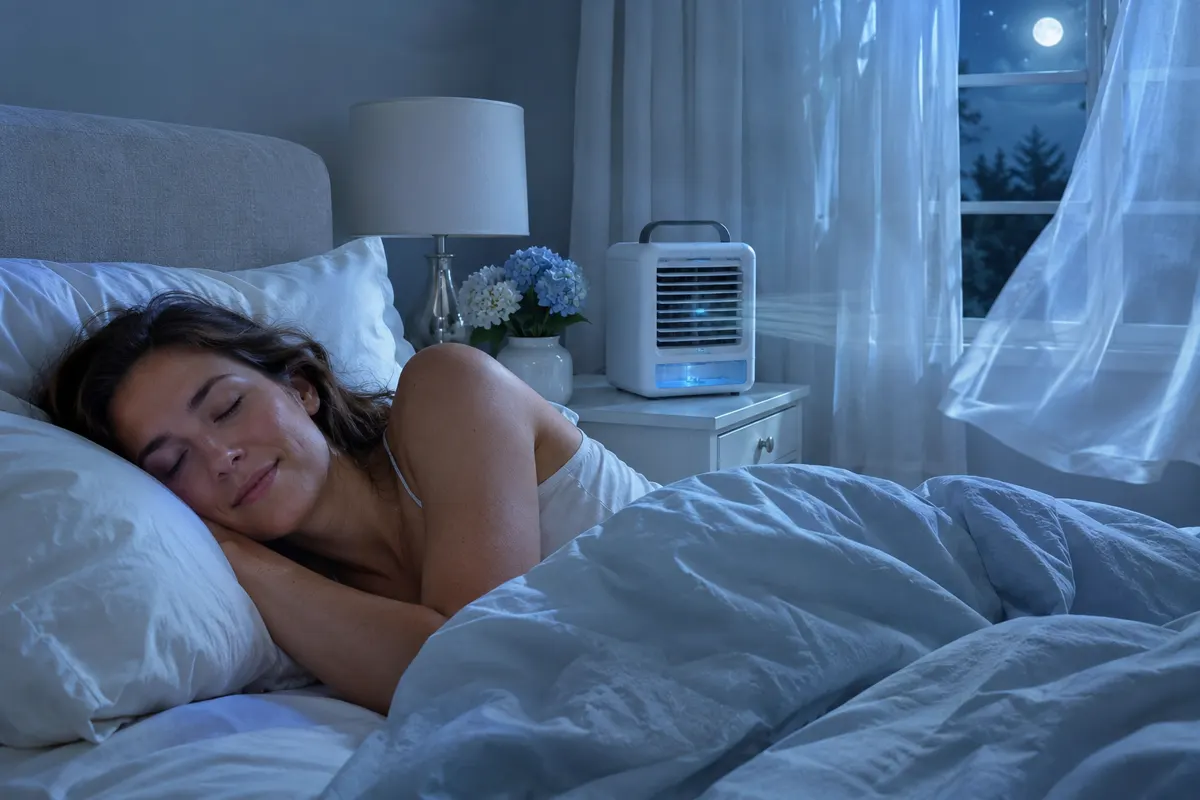
Bedroom comfort is full of round numbers: 65 degrees, 68 degrees, 78 degrees, 50 percent humidity, a warm bath 90 minutes before bed. Some come from federal agencies, some from sleep research and some from repetition. Here is where each one comes from, what the source actually says, and how to adapt it to a real bedroom, including the overheated rooms many people sleep in all year round.
Why a Cool Room Helps You Sleep
Your body runs on a daily rhythm. In the evening, as melatonin rises, your core body temperature starts to fall by roughly 1°C (about 2°F) and stays lower through the night, rising again toward morning. To shed that heat, blood flow increases to the hands and feet, which is why warm feet and a cool room are such a good combination. A bedroom that is too warm works against this process: people tend to wake more often and spend less time in deep sleep. A room that is cool, not cold, makes the body's job easier.
Rule 1: “65°F Is the Perfect Sleeping Temperature”
Where it comes from: sleep-health organizations. The Sleep Foundation and many sleep physicians recommend a cool bedroom, commonly cited as roughly 60 to 68°F, and about 65°F is the figure repeated most often in the media. We could not trace the exact 65 to a single original study; it works best as the middle of a range.
Does it hold up? As a starting point, yes. The research consistently points to cool rooms being better for sleep than warm ones. But the right number depends on your bedding, pajamas, partner and body.
How to adapt it: start around 65°F and adjust a degree or two per week until you stop waking up warm. If you share a bed with someone who runs cold, cool your side rather than the whole room; see hot sleeper, cold sleeper.
Rule 2: “Keep Humidity Between 30 and 50%”
Where it comes from: the U.S. Environmental Protection Agency, which advises keeping indoor relative humidity below 60%, and ideally between about 30 and 50%, to limit mold and dust mites.
Does it hold up? Yes. Very dry air (common with winter heating) can leave your throat and lips dry by morning; very humid air feels sticky and warmer than the thermometer says.
How to adapt it: a cheap hygrometer tells you where you are. In a dry, overheated winter bedroom, gentle evaporative cooling adds a little moisture as it cools, which we explain in can an evaporative cooler be used as a humidifier? In humid summer weather, evaporative cooling works less well, so ventilation matters more.
Rule 3: “Set the Thermostat to 78°F in Summer”
Where it comes from: the U.S. Department of Energy's energy-saving guidance, which suggests around 78°F when you are home in summer to save on cooling costs.
Does it hold up? For the electric bill, yes. For sleep, 78°F is warmer than the range sleep experts recommend, which is exactly the conflict millions of households live with.
How to adapt it: keep the whole house at the energy-saving setting and cool only the bedroom, or only the bed area, at night. Personal cooling closes the gap between the 78°F your bill likes and the 65°F your sleep likes. Our portable cooler vs. AC vs. fan comparison shows the options.
Rule 4: “Take a Warm Bath 90 Minutes Before Bed”
Where it comes from: sleep research. A 2019 review in Sleep Medicine Reviews by researchers at the University of Texas at Austin found that a warm bath or shower about one to two hours before bedtime was linked to falling asleep faster.
Does it hold up? It sounds backwards for a cool-room article, but it fits: warm water draws blood to the skin, and afterwards the body sheds heat faster, which helps the evening drop in core temperature. The cool room then keeps that process going.
How to adapt it: shower in the evening rather than right before lights out, then step into a bedroom that is already cool.
Rule 5: “Babies Need a Warmer Room”
Where it comes from: instinct more than guidance. Pediatric safe-sleep advice from the American Academy of Pediatrics actually warns against overheating, and suggests dressing babies in light layers rather than heating the room. We cover the details in how to keep a baby's room cool.
How to adapt it: keep the nursery comfortable for a lightly dressed adult, check the back of the baby's neck, and follow your pediatrician's advice.
The Bedroom Numbers at a Glance
| The rule people repeat | Where it comes from | Verdict | Real-life version |
|---|---|---|---|
| 65°F for sleep | Sleep Foundation and sleep experts (range ~60–68°F) | Good middle of a range; exact origin unclear | Start at 65°F, adjust by feel |
| Humidity 30–50% | U.S. EPA | Holds up | Check with a hygrometer |
| 78°F in summer | U.S. Department of Energy | Good for bills, warm for sleep | Whole house at 78°F, bedroom cooler |
| Warm bath before bed | 2019 sleep research review | Holds up (1–2 hours before) | Evening shower, then a cool room |
| Warmer room for babies | Instinct; AAP warns of overheating | Does not hold up | Light layers, comfortable room |
Signs Your Bedroom Is Above the Sweet Spot
- You kick off the covers and pull them back on all night.
- You wake up between 2 and 4 a.m. feeling warm or sweaty.
- The room feels stuffy when you walk in at bedtime.
- Your partner is comfortable and you are not, or the other way around.
More on this in 7 signs your bedroom is too hot to sleep. And yes, it happens in winter too: radiators and building heat can push apartments well above the sleep range, as we explain in why is my apartment so hot in winter?
How to Get Your Bedroom Into the Range Tonight
- Lower the heat or AC set point for the nightEven a few degrees helps.
- Block the afternoon sunClosed blinds keep the room from storing heat before bedtime.
- Switch to breathable beddingCotton or linen layers you can adjust.
- Warm shower one to two hours before bedThen a cool room.
- Add airflow at the bedA gentle personal breeze cools you without chilling the house.
Our Recommendation: AiraBreeze
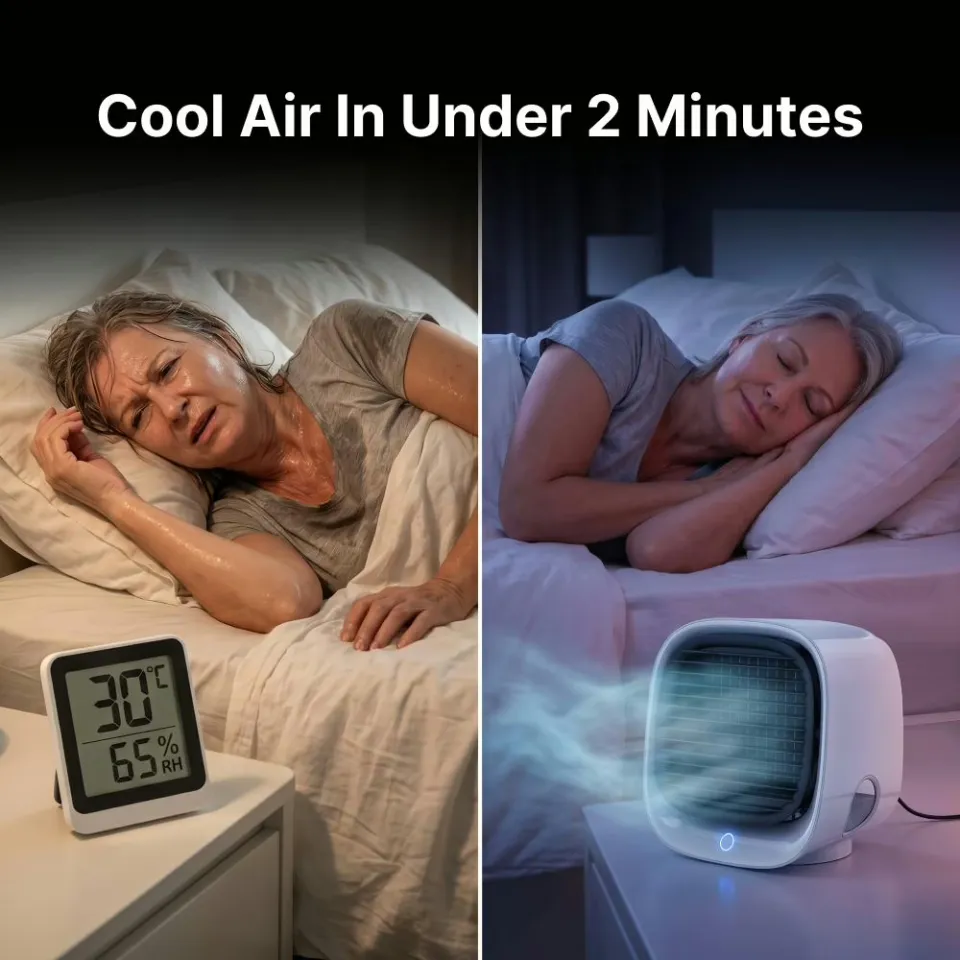
If your bedroom sits above the sleep range and cooling the whole house to 65°F is not realistic, AiraBreeze is the personal air cooler we recommend. It is designed to filter, cool and humidify the air around one person, so it brings the space around your bed closer to the cool, comfortable range sleep experts describe, while the rest of the house stays at an energy-saving setting. Its low setting is quiet enough for sleep, and one fill runs through the night.
- Filters, cools and humidifies: one compact device for warm, stuffy or dry bedrooms.
- Personal, targeted comfort: cools your side of the bed, not the whole house.
- Quiet on low: 3 fan speeds, with a low setting suited to sleep.
- Up to 8 hours per fill: enough for a full night.
- Ready in about 90 seconds: fill the tank, plug it in, done.
- Lightweight and compact: fits on a nightstand and moves room to room.
Owners rate it 4.7/5 across 1,888+ reviews, and 97% say they would recommend it. The official site is currently offering 75% OFF, and every order comes with a 30-day money-back guarantee. AiraBreeze is an evaporative cooler for personal, small-space comfort, not a replacement for central air, and it works best in drier air. For specs and owner feedback, read our full AiraBreeze review.
Frequently Asked Questions
What is the best temperature for sleeping?
Sleep experts and the Sleep Foundation generally recommend a cool bedroom, commonly cited as roughly 60 to 68°F, with about 65°F the most quoted number. The ideal point within that range depends on your bedding, sleepwear and personal preference.
Is 70 degrees too warm to sleep?
For many people 70°F is slightly warmer than the commonly recommended range, though some sleep well there with light bedding. If you wake up warm or kick off the covers, try lowering the room by a degree or two or adding a gentle breeze near the bed.
What humidity is best for sleeping?
The U.S. EPA recommends keeping indoor humidity below 60%, ideally between about 30 and 50%. Very dry air can leave your throat and lips dry, while very humid air feels sticky and warmer than it is.
Why do I sleep better in a cool room?
In the evening your core body temperature naturally drops slightly as part of your daily rhythm. A cool room helps your body shed heat, which supports falling asleep and staying asleep; a warm room works against it and tends to cause more awakenings.
Can a personal air cooler help me sleep?
A personal evaporative cooler can make a warm bedroom feel more comfortable by cooling and moving the air near your bed, especially in drier air. It works on the space around you rather than the whole house, so it pairs well with an energy-saving thermostat setting.
New here? Browse more honest home-product reviews on our Review Elite home page, or read is it safe to sleep with an air cooler on?