Hot Sleeper, Cold Sleeper: How Couples Can Both Sleep Comfortably in the Same Bed
The Short Answer
Stop trying to find one temperature that suits two different bodies. Set the bedroom at the cooler level the hot sleeper needs, give each person their own bedding, and add targeted cooling only on the hot side of the bed while the cold sleeper adds warmth on theirs. A quiet personal evaporative cooler like AiraBreeze on the hot sleeper’s nightstand is one of the simplest ways to cool one person without chilling the other.
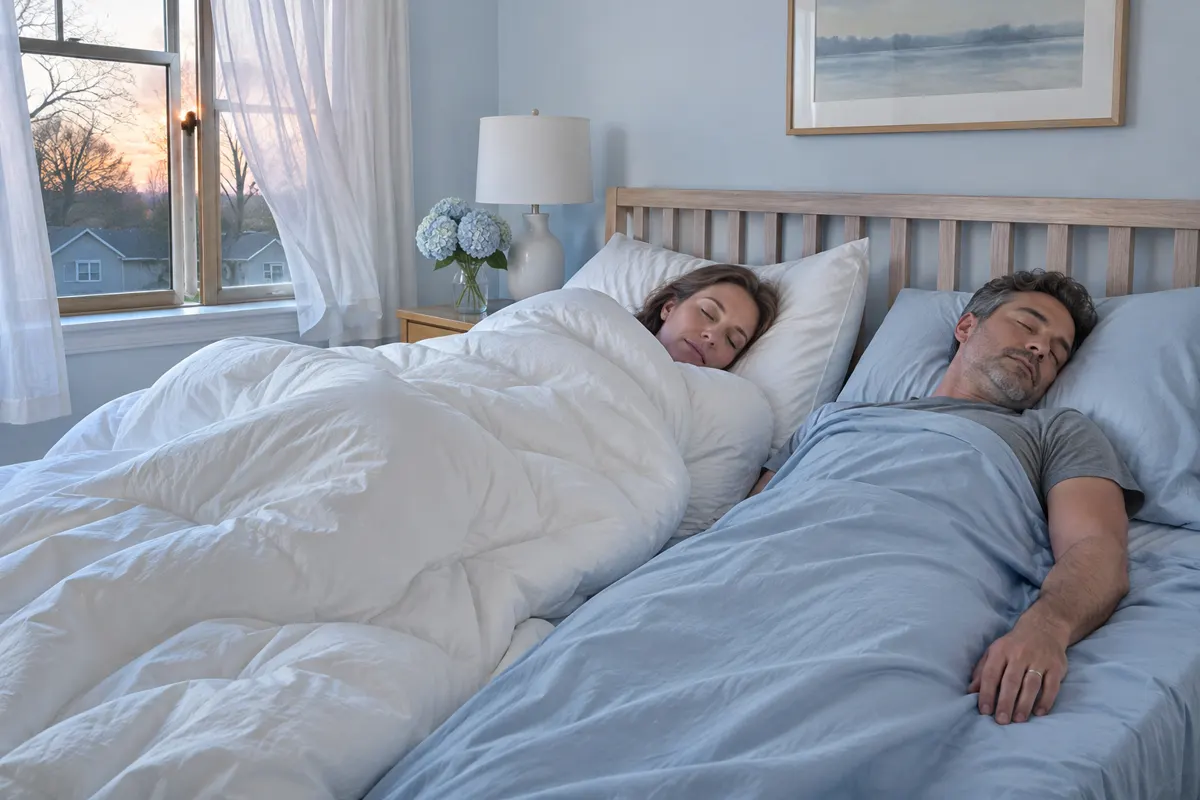
It is one of the most common bedroom negotiations there is. One of you kicks the covers off at 2 a.m., the other is wearing socks and pulling the duvet back. One wants the window open, the other wants the heating on. Nobody is being difficult: people genuinely differ in how warm they feel at night. The good news is that you do not need separate rooms or a nightly thermostat war. You need a plan that treats the bed as two comfort zones instead of one.
Why Couples Sleep at Different Temperatures
- Bodies differ. Size, muscle mass, metabolism and circulation all change how warm someone feels in bed.
- Evening habits. A late workout, a big dinner, a hot shower right before bed or a glass of wine can leave one partner running warm.
- Hormones and life stages. Many people notice they sleep hotter or colder at different times of life.
- Shared bedding traps heat. One heavy duvet over two people holds the warmth of both bodies, which is perfect for one partner and too much for the other.
- The room itself. Upstairs bedrooms, sunny west-facing walls and overheated apartments in winter make everything worse (here is why apartments get so hot in winter).
If night sweats are new, intense or come with other symptoms, mention it to a doctor. For everyday “I run hot, you run cold” differences, the steps below are what make the difference.
Step 1: Agree on the Room Temperature Together
Sleep experts commonly suggest a cool bedroom, often quoted as roughly 60 to 67°F. The fair compromise for couples usually looks like this: set the room toward the cooler end that the hot sleeper needs, because it is much easier to add warmth to one person than to take heat away from one person. Talk about it once, during the day, not at midnight when you are both tired. A simple question works: “What would make you comfortable, and what can I add on my side?”
Step 2: Split the Bedding
This is the change most couples wish they had made years earlier. Instead of one big duvet, use two: a light one or just a sheet for the hot sleeper, a warmer comforter for the cold sleeper. Some couples keep one large top cover for looks during the day and two personal layers underneath at night.
| For the hot sleeper | For the cold sleeper |
|---|---|
| Thin cotton or linen sheet, light duvet | Warmer comforter or an extra blanket |
| Light, breathable sleepwear | Socks and long sleeves |
| Cool shower an hour before bed | Warm shower or a hot drink before bed |
| A steady breeze on their side | Side of the bed away from the window and airflow |
| Pillow that does not trap heat | Throw blanket at the foot of the bed |
Step 3: Cool Only the Hot Side of the Bed
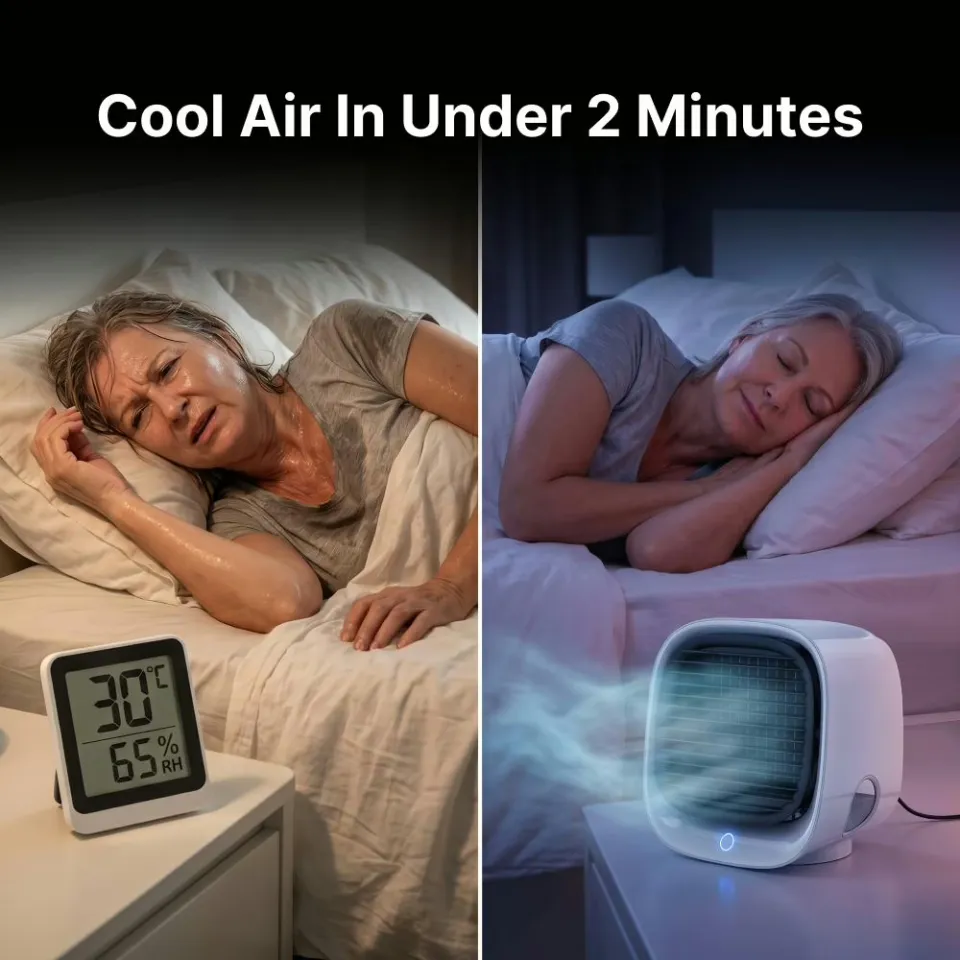
Turning the whole house colder to rescue one person wastes energy and makes the cold sleeper miserable. Targeted cooling solves both problems. Place a quiet fan or a personal cooler on the hot sleeper’s nightstand, aimed at their side, on a low setting. The breeze reaches the person who needs it and fades before it reaches the other side of the bed.
A personal evaporative cooler is especially good at this job because it is made for the space right around you: it pulls room air through a water-soaked filter, and the air that comes out feels noticeably cooler, without the compressor noise of an AC. If you are new to the idea, our guide on whether evaporative coolers actually work explains the science, and is it safe to sleep with an air cooler on? answers the bedtime questions. If the hot sleeper is going through hot flashes, see our comparison of a fan vs. a personal air cooler for hot flashes at night.
Step 4: Build a Bedtime Routine for Two
- Cool the room before bed, not during the night.Open a window in the evening if the outside air is cooler, close sunny curtains in the afternoon, and switch on the personal cooler 15 to 30 minutes before the hot sleeper goes to bed.
- Stagger your bedtime warm-up and cool-down.The cold sleeper can warm up with a shower or a warm drink while the hot sleeper cools down. You meet in bed both comfortable.
- Agree on window and door rules.A cracked window helps an evaporative cooler work and helps the hot sleeper; the cold sleeper takes the side farther from it.
- Keep the noise low.Use the lowest fan speed that keeps the hot sleeper comfortable, so it never wakes the other partner.
- Check in after a week.What is working, what is not? Small adjustments, such as a lighter sheet or a different setting, usually finish the job.
More bedroom ideas are in 7 signs your bedroom is too hot to sleep, and if your bedroom is upstairs, read why your upstairs is so hot.
What About Sleeping Apart?
Some couples choose separate rooms on some nights for better rest, and that is a valid choice. Most, though, find they do not need to: a cooler room, two sets of bedding and personal cooling on the hot side usually end the tug of war. Try those first, together, for a couple of weeks.
Our Recommendation: AiraBreeze
For couples where one partner sleeps hot, AiraBreeze is the personal air cooler we recommend. It does exactly what this guide needs: it cools one person and their side of the bed, quietly, without turning the whole room into a fridge for the partner who runs cold. Fill the tank, plug it in, and cool air reaches the hot sleeper in about 90 seconds.
- Targeted, personal cooling: made for the space right around you, ideal on one nightstand.
- Quiet on low: 3 fan speeds, and the lowest is designed to fade into the background at night.
- Up to 8 hours per fill: enough for a full night’s sleep without refilling.
- Cool air in about 90 seconds: no window kit, no venting, no installation.
- Filters and humidifies as it cools: no dried-out throat the way some AC rooms feel.
- Lightweight and compact: easy to move from the bedroom to the home office in the morning.
Owners rate it 4.7/5 across 1,888+ reviews, and 97% say they would recommend it. The official site is currently offering 75% OFF, and every order comes with a 30-day money-back guarantee. To be clear about what it is: AiraBreeze is an evaporative cooler for personal, small-room comfort, not a replacement for central air, and it works best in drier air with a window cracked. For specs and owner feedback, read our full AiraBreeze review.
Frequently Asked Questions
What temperature should a bedroom be for two people with different preferences?
Sleep experts commonly suggest a cool bedroom, often quoted as roughly 60 to 67 degrees Fahrenheit. For couples, set the room at the cooler end that the hot sleeper needs, then let the cold sleeper add warmth with their own blanket, socks or a warmer duvet on their side.
Why does my partner sleep so hot?
People simply differ in how warm they feel at night, depending on body size, activity, sleepwear, bedding, a late meal or exercise, alcohol and hormones. Two bodies under one heavy duvet also trap more heat. If night sweats are new or come with other symptoms, it is worth mentioning to a doctor.
Should couples use separate blankets?
For many couples it is the single most effective change. Two lighter duvets or a thin sheet for one and a thick comforter for the other let each person control their own warmth, and it also cuts down on tugging the covers at night.
Can a personal air cooler cool just one side of the bed?
A compact personal evaporative cooler is designed to cool the person and the space close to it, so placing it on the hot sleeper's nightstand, aimed at that side, gives a targeted breeze without chilling the whole room. It works best in drier air with a window cracked.
Is sleeping apart bad for a relationship?
Not necessarily. Some couples sleep apart on some nights to get better rest. Most, though, find that a cooler room, split bedding and personal cooling on the hot side solve the temperature problem without separate rooms.
New here? Browse more honest home-product reviews on our Review Elite home page, or read how to cool a hot room: an if-then guide.