How to Cool a Hot Room: An If-Then Guide to the Right Fix for Your Situation
The Short Answer
The right fix for a hot room depends on two things: how humid the air is and where you need to be cool. Start with the free steps (block the sun, cut heat sources, ventilate when it is cooler outside). Then, if the air is fairly dry and you need cooling at a desk or a bed, then a personal evaporative cooler is the cheapest real upgrade. If the air is very humid, then a fan or an AC works better. If the whole house is dangerously hot in a heat wave, then AC or a cooling center comes first. For the most common case, one hot bedroom or office, we recommend the AiraBreeze personal air cooler.

There is no single best way to cool a room, which is why so much advice online contradicts itself. A fan that is perfect in Phoenix does little on a sticky day in Houston; a window AC that makes sense for a homeowner is not an option for many renters; and a whole-house solution is wasted money if only one person in one room is hot. This guide works like a map: pick the branch that matches your situation and you will land on the fix that actually fits.
Step 1: The Free Fixes Everyone Should Try First
- Block the sun. Close blinds and curtains on sunny windows during the day; sunlight through glass is one of the biggest heat sources in a room.
- Cut indoor heat. Switch off lamps, chargers, computers and appliances you are not using; move cooking and laundry to cooler hours.
- Ventilate at the right time. Open windows when the outside air is cooler than the inside, usually late evening and early morning, and close them when it heats up.
- Move air across your body. A breeze helps sweat evaporate, which is how your body cools itself.
- Cool yourself, not just the room. Cold water, light clothes and breathable sheets make a real difference.
For the full list of no-cost tricks, see how to stay cool without AC.
Step 2: Check the Humidity
This is the branch most people skip, and it decides which device will work. Look at the humidity in your local weather app or on a cheap indoor hygrometer.
| If the air is… | Then the best tool is… | Why |
|---|---|---|
| Dry to moderate | Personal evaporative cooler, with a window cracked | Dry air absorbs water easily, so the air blown out is noticeably cooler. |
| Humid but not extreme heat | Fan, ceiling fan, dehumidifier | Moving air still helps sweat evaporate; added moisture would not help. |
| Very humid and very hot | Air conditioning | AC both cools and removes moisture. |
Why the difference? Evaporative cooling uses water turning into vapor to pull heat from the air, and dry air takes up water much more easily. We explain the science in do evaporative air coolers actually work?
Step 3: Follow Your Branch
If you are hot in bed at night…
…then focus on the bed, not the house. Close the blinds all day, open the window once the evening cools, switch to breathable sheets and keep a gentle breeze on you. A small cooler on the nightstand that runs all night on one tank does more for sleep than turning the whole-house thermostat down. See signs your bedroom is too hot to sleep and is it safe to sleep with an air cooler on.
If you are hot at your desk during the day…
…then cool the person, not the room. Pull the desk out of direct sun, shut down idle electronics and aim cool air at your upper body. A personal cooler on the desk is exactly the right size for this job.
If the upstairs is always hotter than downstairs…
…then deal with the heat rising and the roof first: blinds, attic ventilation if you own the home, and fans that push hot air out in the evening. The full list of causes is in why is my upstairs so hot.
If the kitchen turns into an oven when you cook…
…then use the range hood, cook in the cooler hours and keep cooling air on the cook, not the stove. More ideas in how to stay cool while cooking.
If your apartment is too hot even in winter…
…then the problem is usually building heat you cannot turn down: radiators, a shared boiler or a sunny exposure. Turn off what you control, ventilate briefly and cool your personal space. See why is my apartment so hot in winter.
If you rent and cannot install a window unit…
…then look for plug-in solutions that need no window kit, venting or landlord permission: fans and a personal evaporative cooler that you can carry from room to room. The same idea works on the road; see how to stay cool when traveling.
If the AC just broke…
…then follow our first-hours plan for when the AC stops working, and use a plug-in cooler to keep one room bearable until the repair.
If it is a heat wave and the whole home is dangerously hot…
…then this is a safety issue, not a comfort issue. Older adults, babies and people with health conditions are most at risk. Get to an air-conditioned place such as a cooling center, drink water, and seek medical help for dizziness, confusion, nausea or a racing heart. A personal cooler is a comfort tool, not a substitute for air conditioning in extreme heat.
Step 4: Match the Tool to the Space
| Situation | Best fit | Running cost |
|---|---|---|
| One person, one desk or bed, dry to moderate air | Personal evaporative cooler | Low: a small fan and pump |
| Mild heat, any climate | Fan or ceiling fan | Very low |
| Whole room or home, humid heat | Window, portable or central AC | Higher: compressor |
| Renter, no window unit allowed | Personal cooler + fans | Low |
If you want the side-by-side numbers, read portable cooler vs. AC vs. fan, and before you buy anything, check how to choose a portable air cooler.
Our Recommendation: AiraBreeze
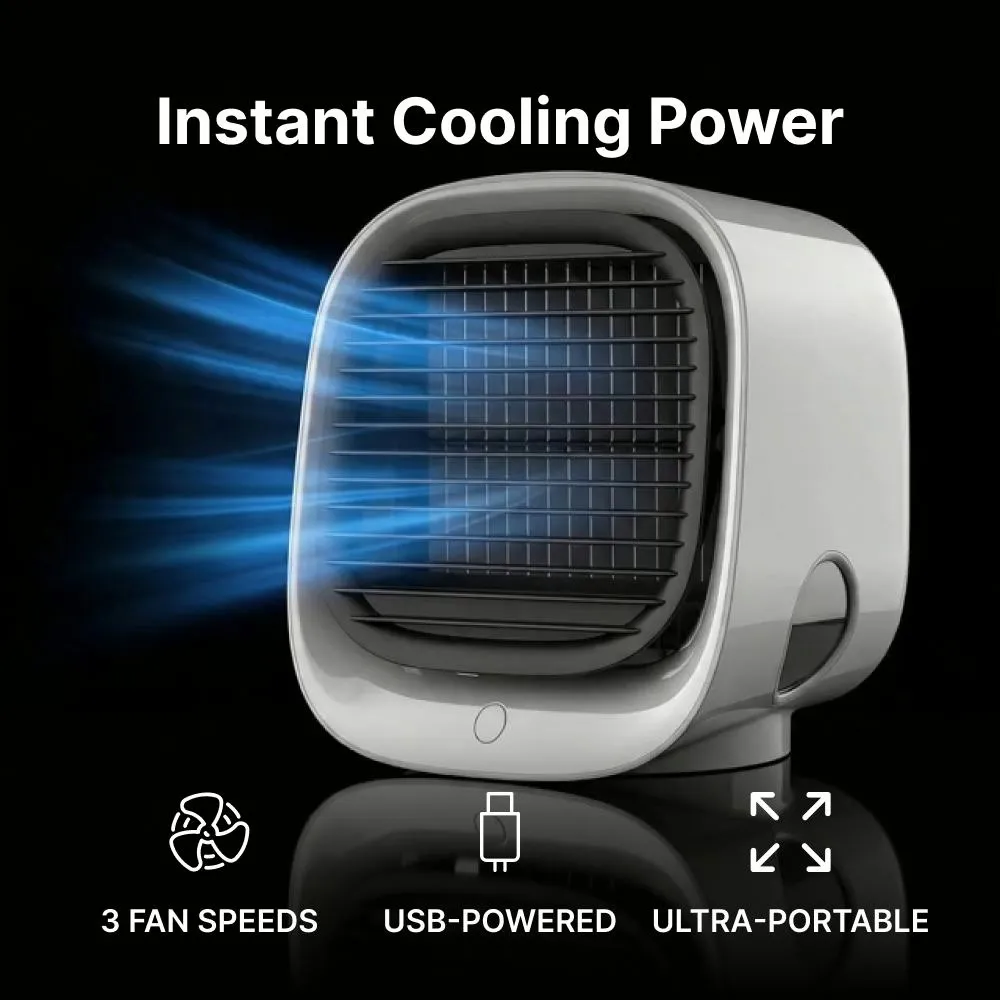
For the branch most readers land on, one hot room, one person and no wish to install anything, AiraBreeze is the personal air cooler we recommend. It is made for exactly that job: cooler air right at your desk or bed, in about 90 seconds, for a fraction of the power of an air conditioner.
- Cool air in about 90 seconds: fill the tank, plug it into any outlet, press a button. No window kit, no venting, no installation.
- Personal, small-space cooling: designed for spaces up to 215 sq ft.
- Carry it room to room: desk by day, bedside at night.
- Up to 8 hours per fill: enough for a full night’s sleep without refilling.
- 3 fan speeds, quiet operation: a steady breeze on low will not keep you awake.
- Low running cost: a small fan and water pump instead of a compressor.
Owners rate it 4.7/5 across 1,888+ reviews, and 97% say they would recommend it. The official site is currently offering 75% OFF, and every order comes with a 30-day money-back guarantee. To be clear about what it is: AiraBreeze is an evaporative cooler for personal, small-room comfort, not a replacement for central air, and it works best in drier air with a window cracked. For specs and owner feedback, read our full AiraBreeze review.
Frequently Asked Questions
What is the fastest way to cool down a hot room?
Block the sun first (close blinds or curtains on sunny windows), switch off heat sources such as lamps, ovens and electronics, then move air across you. In dry air, a personal evaporative cooler adds real cooling right where you sit or sleep; in humid air, a fan or an air conditioner works better.
Should I use a fan or an evaporative cooler?
It depends on humidity. A fan moves air but does not lower the air temperature; it helps you feel cooler as long as sweat can evaporate. An evaporative cooler adds moisture and lowers the temperature of the air it blows, which works best in drier air with a window cracked. In very humid weather, a fan or AC is the better pick.
How do I cool a bedroom at night without AC?
Keep blinds closed during the day, open windows when the outside air cools down in the evening, use light breathable bedding, and keep a gentle breeze on you while you sleep. A small evaporative cooler on the nightstand can run all night on one tank and blow cooler air directly at the bed.
Is an evaporative cooler a replacement for air conditioning?
No. A personal evaporative cooler is made to cool the person and the space around them, not a whole house. It is a low-power, no-installation way to stay comfortable at a desk or in bed, and it works best in drier air.
When is a hot room a health concern?
During heat waves, very hot indoor temperatures can be dangerous, especially for older adults, babies and people with health conditions. Signs such as dizziness, confusion, nausea, a racing heart or no longer sweating call for cooling down right away and getting medical help. If your home stays dangerously hot, go to an air-conditioned place such as a cooling center.
New here? Browse more honest home-product reviews on our Review Elite home page, or read how to use a portable air cooler for colder air.