AC Stopped Working? What to Do in the First Hours to Stay Cool (and Until the Repair)
The Short Answer
First, spend 15 minutes on the easy checks: thermostat, breaker, air filter, outdoor unit and ice on the coils. If none of those bring it back, switch the system off, book the repair, and shift to a different goal: not cooling the house, but keeping the people in it comfortable and safe. Shade the windows, stop adding heat, move air across people, cool your body directly, and set up personal cooling where you actually sit and sleep. For that last part, a compact evaporative cooler like the AiraBreeze is the backup we recommend: it needs no installation, runs on a regular outlet and keeps one person comfortable for the hours and days until the technician arrives.
It is the quietest sound in the house: the air conditioner clicking off and not coming back. Then the temperature starts to creep up, and the questions start. Is it something simple? Should I keep trying it? How do I get through tonight? This guide walks through exactly what to do in order, from the first fifteen minutes to the days of waiting, with the mistakes that make it worse and a realistic plan for staying cool.
The First 15 Minutes: Checks That Fix the Easy Problems
A surprising share of “broken” air conditioners are stopped by something you can fix yourself. Go through these in order before you call anyone.
- ThermostatIs it set to Cool, with the target temperature below the room temperature? Are the batteries fresh? A blank or dim display is a battery problem, not an AC problem.
- Breaker panelLook for a tripped breaker (often labeled AC, HVAC, air handler or condenser). Reset it once. If it trips again, stop; that is a job for a technician.
- Air filterPull the filter. If you cannot see light through it, it may be starving the system of air, which can make the indoor coil freeze. Replace it.
- Ice on the indoor unit or copper linesIf you see frost or ice, turn the system off at the thermostat and let it thaw for a few hours (you can run the fan only). A frozen coil is often a filter or airflow problem, sometimes low refrigerant.
- Outdoor unitIs the disconnect switch near it on? Is the fan spinning? Is the unit clear of leaves, grass clippings, cardboard and plants? Gently clear debris; never open the panels.
- Vents and returnsAre supply vents open and the return grille unblocked by furniture or curtains?
- Drain lineMany systems shut off when the condensate drain backs up. A float switch in a full drain pan is a common, cheap cause. If the pan is full, that is your clue for the technician.
If the system is running but blowing warm air, or not running at all after these checks, it is time to call. Ask for a realistic timeline when you book: in peak season, the appointment itself can be days away, and parts can add more.
What NOT to Do
- Do not keep restarting it. Repeatedly cycling a system that trips or freezes can turn a cheap repair into a compressor replacement.
- Do not set the thermostat lower to “push” it. If it cannot reach 76°F, it cannot reach 68°F either.
- Do not open all the windows at noon. If it is hotter outside than inside, you are heating the house. Open up only when the outdoor air is cooler, usually late evening and early morning.
- Do not cook with the oven or run the dryer while you are trying to keep the house cool. Both add heat for hours.
- Do not rely on fans alone in extreme heat. Fans help your body shed heat, but when the room is in the 90s they stop helping and can make things worse. Cool the body directly instead.
- Do not ignore the heat signs covered below, especially for babies, older adults and anyone with a health condition.
Hours 1 to 6: Keep the Heat Out and Cool the People, Not the House
Once the AC is off, the house will warm up. You cannot stop that entirely, but you can slow it dramatically and keep yourself comfortable inside it.
- Block the sun. Close blinds and curtains on every window that gets direct light, especially south- and west-facing ones. This alone can keep a room several degrees cooler.
- Turn off heat sources. Lights you do not need, the TV in the empty room, the computer that is just idling. Cook in the microwave or outside.
- Move air across people. A fan pointed at where you sit does far more than a fan stirring an empty room. A ceiling fan should spin counterclockwise in summer to push air down.
- Cool your body. A cool shower, a damp cloth on the neck and wrists, cold drinks, light clothing. Your body temperature matters more than the thermostat reading.
- Pick one room. Choose the coolest room (usually lowest floor, north side, fewest windows), close its door and concentrate your cooling there.
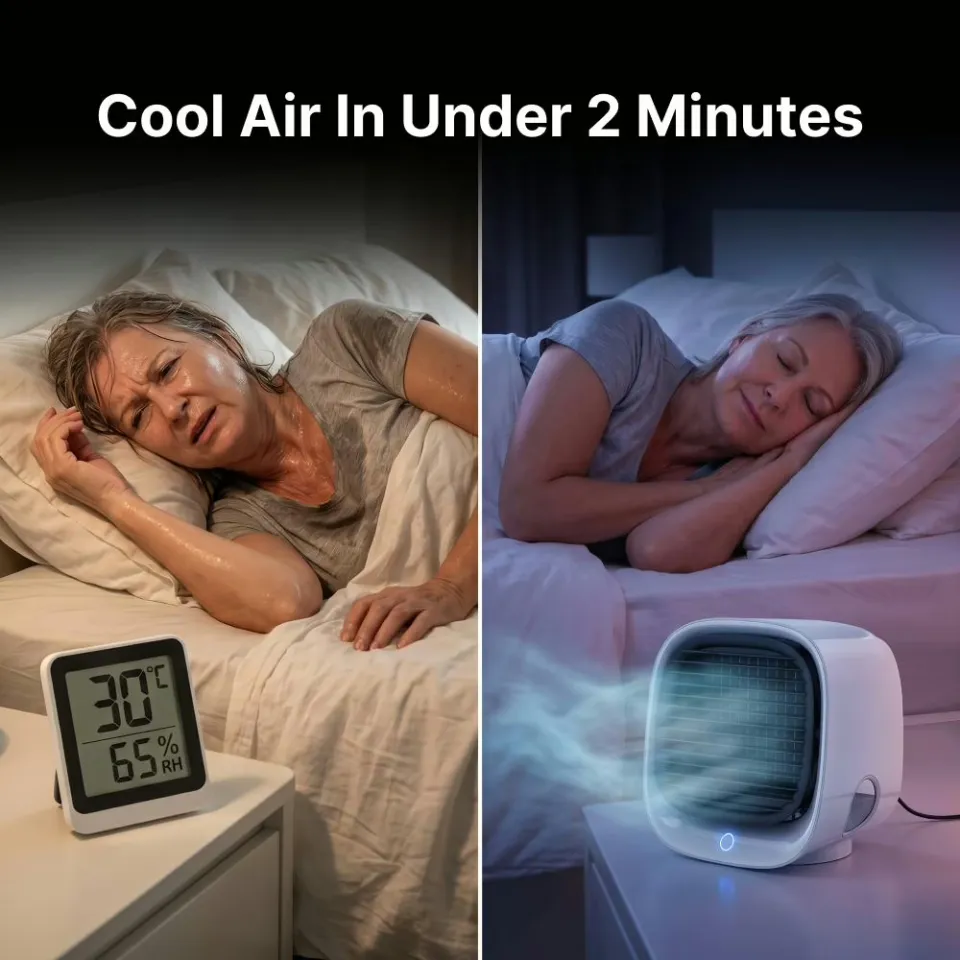
- Set up personal cooling. This is where a compact evaporative cooler earns its place: it cools the air right in front of it by a few degrees and adds a steady breeze exactly where you sit or sleep. The AiraBreeze takes about 90 seconds to start producing cool air and runs from any outlet. Because it adds a little moisture to the air, crack a window in that room and it works best; in very humid weather the effect is smaller, as we explain in do evaporative air coolers actually work?
Getting Through the Night
The hardest part of a dead AC is sleeping. A few things help most: open windows once the outdoor air is cooler than indoors (usually after 9 or 10 p.m.) and close them again in the morning; sleep in the coolest room, even if that means the floor downstairs; use a light cotton sheet and a damp washcloth on your neck; and keep a personal cooler on the nightstand pointed at your upper body on its lowest, quietest setting. Our guide on whether it is safe to sleep with an air cooler on covers placement and the questions people ask.
Days 2 and Beyond: If the Repair Is Days Away
| Situation | What to do | Backup cooling |
|---|---|---|
| Technician coming today or tomorrow | Shade, fans on people, cold showers, one cool room | Personal cooler in the room you use most |
| Several days in mild weather (70s–low 80s outside) | Night ventilation, daytime shading, no oven or dryer | Personal cooler at the desk by day, bedside by night |
| Several days in a heatwave (90s and up) | Spend the hottest hours somewhere air-conditioned (library, mall, a friend’s place); check on vulnerable people | Personal cooler helps mornings and nights; not a substitute for leaving during peak heat |
| Part on back-order, a week or more | Ask about a temporary window unit or a second quote; consider a hotel for the hottest nights if anyone is vulnerable | Personal cooler keeps you comfortable in the in-between hours |
The Heat Warning Signs You Should Never Wait Out
A hot house is uncomfortable for most healthy adults and genuinely dangerous for some people: babies, older adults, pregnant women, people with heart or lung conditions, and anyone on medications that affect heat tolerance. Watch for heavy sweating, cramps, dizziness, headache and nausea (heat exhaustion), and especially for confusion, very hot skin, a fast pulse, fainting or sweating that stops (signs of heat stroke). Move the person somewhere cooler, give water if they are alert, cool the skin with wet cloths, and call emergency services if symptoms are severe or do not improve. This article is about keeping comfortable, not medical advice: when in doubt, call.
Prevent the Next One
- Change the filter every one to three months; it is the most common preventable cause of a frozen coil.
- Keep the outdoor unit clear and hosed free of debris each spring.
- Book a tune-up before the season instead of waiting for the first heatwave, when every company is booked solid.
- Keep a backup. A compact personal cooler in the closet means the next breakdown is an inconvenience, not a crisis. It also cuts your AC bill the rest of the year by cooling one person instead of the whole house; see portable cooler vs. AC vs. fan.
Our Recommendation: AiraBreeze
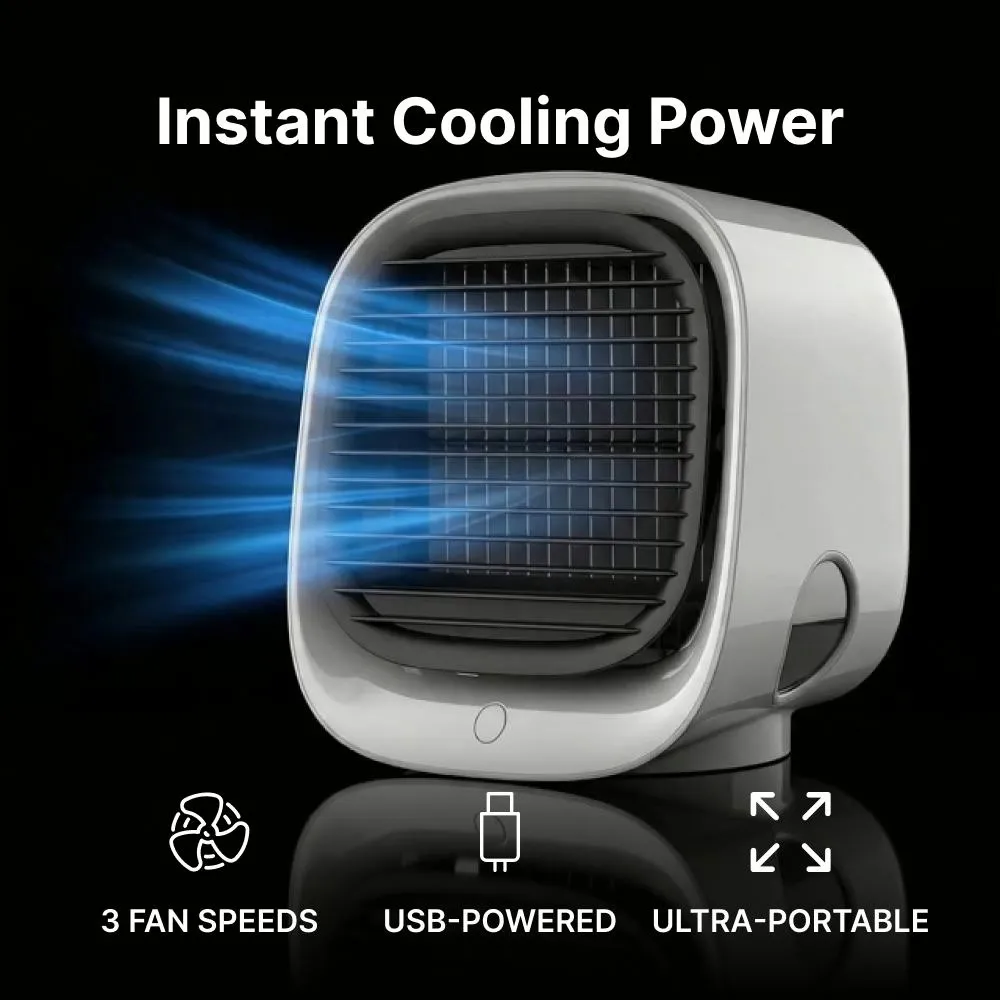
When the AC dies, you do not need a second air conditioner; you need something that keeps the people in the house comfortable right now, with no installation and no electrician. AiraBreeze is the backup cooler we recommend for exactly that:
- Cool air in about 90 seconds: fill the tank, plug it into any outlet, press a button. No window kit, no venting, no waiting for delivery of a 60-pound unit.
- Personal, small-space cooling: designed for spaces up to 215 sq ft, so it covers the one room you retreat to, or the spot where you sit and sleep.
- Carry it room to room: lightweight enough to move from the desk by day to the nightstand at night with one hand.
- Up to 8 hours per fill: enough for a full night’s sleep without refilling.
- 3 fan speeds, quiet operation: a steady breeze on low will not keep you awake.
- Low running cost: a small fan and water pump instead of a compressor, so running it all day while you wait costs very little.
Owners rate it 4.7/5 across 1,888+ reviews, and 97% say they would recommend it. The official site is currently offering 75% OFF, and every order comes with a 30-day money-back guarantee. To be clear about what it is: AiraBreeze is an evaporative cooler for personal, small-room comfort, not a replacement for central air, and it works best in drier air with a window cracked. For a dead AC, that is exactly the job: keep you comfortable at your desk, on the couch and in bed until the technician has done theirs. For the full breakdown of specs and owner feedback, read our full AiraBreeze review.
Frequently Asked Questions
What should I check first when my AC stops working?
Start with the thermostat (set to cool, temperature below the room, fresh batteries), then the breaker panel for a tripped breaker, then the air filter (a clogged filter can stop airflow and freeze the system), then the outdoor unit (power switch on, fan spinning, nothing blocking it). If you see ice on the indoor unit or the copper lines, turn the system off and let it thaw for a few hours before calling for service.
Should I keep turning my AC on and off to get it working?
No. Repeatedly restarting a system that is tripping, freezing or not cooling can turn a small repair into a compressor replacement. After the basic checks, switch it off at the thermostat and the breaker, call for service and focus on staying cool in the meantime.
How can I cool my house without AC?
Keep the sun out with closed blinds and curtains during the day, avoid using the oven and dryer, run fans to move air across people (not empty rooms), open windows only when the outdoor air is cooler than indoors, and cool yourself directly with cold water, damp cloths and a personal air cooler at the spot where you sit or sleep.
Can a portable air cooler replace my AC while it is broken?
Not for the whole house, but it can make the difference for the person using it. An evaporative cooler like the AiraBreeze cools the air right in front of it by a few degrees and adds a breeze, which is exactly what you need at your desk, on the couch or beside the bed while you wait for the repair. It works best in drier air and with a window cracked.
When does heat at home become dangerous?
Watch for heavy sweating that stops, dizziness, headache, nausea, confusion, a fast pulse or very hot skin, especially in babies, older adults and people with health conditions. Move to a cooler place, drink water and cool the body with wet cloths; if someone is confused, faints or stops sweating in the heat, call emergency services. If the house stays very hot for days, spend the hottest hours somewhere air-conditioned.
How long does an AC repair usually take?
A simple fix such as a capacitor, contactor or refrigerant leak check is often done the same day the technician arrives, but in peak season the appointment itself can be days away, and a compressor or part on back-order can mean a week or more. Ask for a realistic timeline when you book, and plan your cooling around it.
New here? Browse more honest home-product reviews on our Review Elite home page, or read how to stay cool without AC for the everyday version of this plan.