How to Stay Cool When Traveling: Hotel Rooms, Rentals, RVs and Family Visits in Warm Places
The Short Answer
When you travel somewhere warm, you lose control of the thermostat, so plan to cool yourself, not the building. Check the room’s cooling before you book, use the sun-and-airflow tricks that work anywhere, and bring something that cools the space right around your bed or chair. For road trips, RVs, rentals and family guest rooms, a compact personal evaporative cooler like AiraBreeze is the easiest way to bring your own comfort along, especially in drier climates.
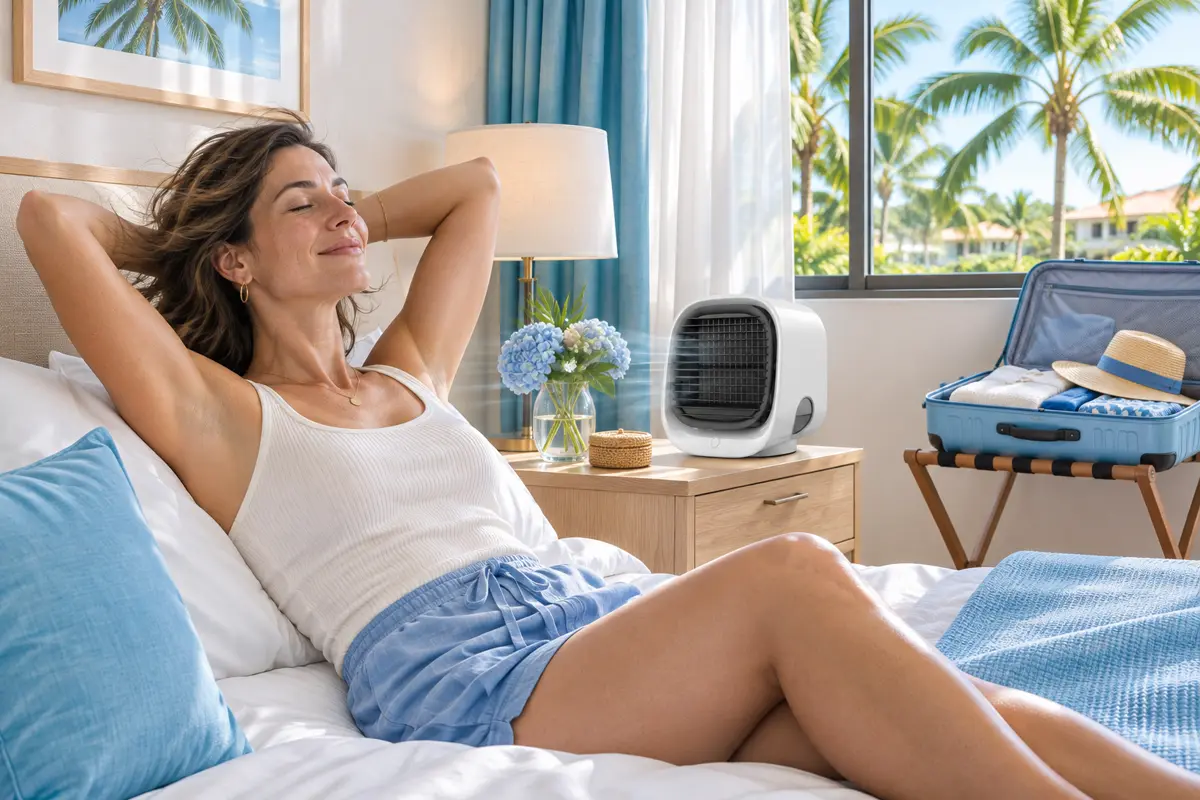
At home you know which room runs hot, where the fan goes and when to open the windows. On the road all of that disappears. The hotel AC rattles or barely works, the vacation rental has one wall unit for the whole place, the RV heats up the minute the sun hits it, and the guest room at your relatives’ house is the attic bedroom nobody else wants. Winter trips to Florida, Arizona, Southern California, Texas or Hawaii, and holiday visits to family in warm states, bring the same question: how do you sleep well when you cannot control the temperature?
Why Travel Rooms Feel Hotter
- You cannot adjust the system. Many hotels and rentals limit the thermostat range, or the unit cycles off when you leave the room.
- Unfamiliar sun exposure. A west-facing room or an RV parked in full sun gains heat all afternoon.
- Small, closed spaces. Guest rooms, campers and studio rentals have little air volume, so they warm up fast.
- Different climate. If you live somewhere cool, an 80°F evening can feel much warmer than it sounds.
- Shared homes. At family, the thermostat is set for the hosts, and turning it down feels rude.
Before You Book or Leave
- Check the listing for cooling details.Look for “air conditioning” in each bedroom, not just “AC available”. Read recent reviews for words like “hot”, “stuffy” or “AC”.
- Ask about the room’s exposure.A north- or east-facing room, a lower floor or a room with blackout curtains stays cooler in the afternoon.
- Check the local humidity.Your weather app shows it. Dry destinations such as Arizona, Nevada or inland California are ideal for evaporative cooling; humid ones such as Florida or the Gulf Coast favor fans and AC.
- Pack light, breathable sleepwear.Cotton or linen, plus a thin sheet in case the bedding is heavy.
- Plan your own cooling.If you are driving, staying in an RV or visiting family, bring a compact personal cooler so you are not dependent on the house system.
Situation by Situation
| Where you stay | Typical problem | What helps most |
|---|---|---|
| Hotel room | AC that is noisy, weak or switches off | Curtains closed by day, ask for a room change, personal cooling at the bed |
| Vacation rental | One AC unit for several rooms | Doors open for airflow, fans, a cooler in the bedroom that gets no AC |
| RV or camper | Heats up fast in the sun | Shade parking, vents open, reflective window covers, a compact cooler inside |
| Family guest room | Thermostat set for the hosts | Window open at night, a fan or personal cooler you control |
| Road trip motel stops | Different room every night | A portable routine you repeat in each room |
In a hotel room
Close the curtains as soon as you check in and keep them closed during the day. If the AC is weak or loud, ask the front desk to check it or to move you; it is a normal request. At night, set any fan or cooler to blow toward the bed, not across the room. If you are a light sleeper, a quiet personal cooler on the nightstand is often better than a rattling wall unit.
In a vacation rental
Rentals often have one main AC unit and a bedroom it never quite reaches. Keep interior doors open to let air move, run the main unit early before the afternoon heat builds, and cool the far bedroom with a fan or a personal cooler. Our guide on why upstairs rooms get so hot explains why loft and second-floor bedrooms are always the worst.
In an RV or camper
Park in the shade when you can, with the windshield facing away from the afternoon sun. Open roof vents and windows when the outside air is cooler, and use reflective covers on sunny windows. A compact cooler you can set on a table or by the bed is a simple, low-power way to make the sleeping area comfortable.
At a relative’s house over the holidays
You do not need to touch anyone’s thermostat. Open the guest-room window when the evening cools, switch to a lighter blanket and bring your own personal cooling for the nightstand. It is a quiet way to sleep well without asking your hosts to change anything.
Bringing a Personal Cooler on a Trip
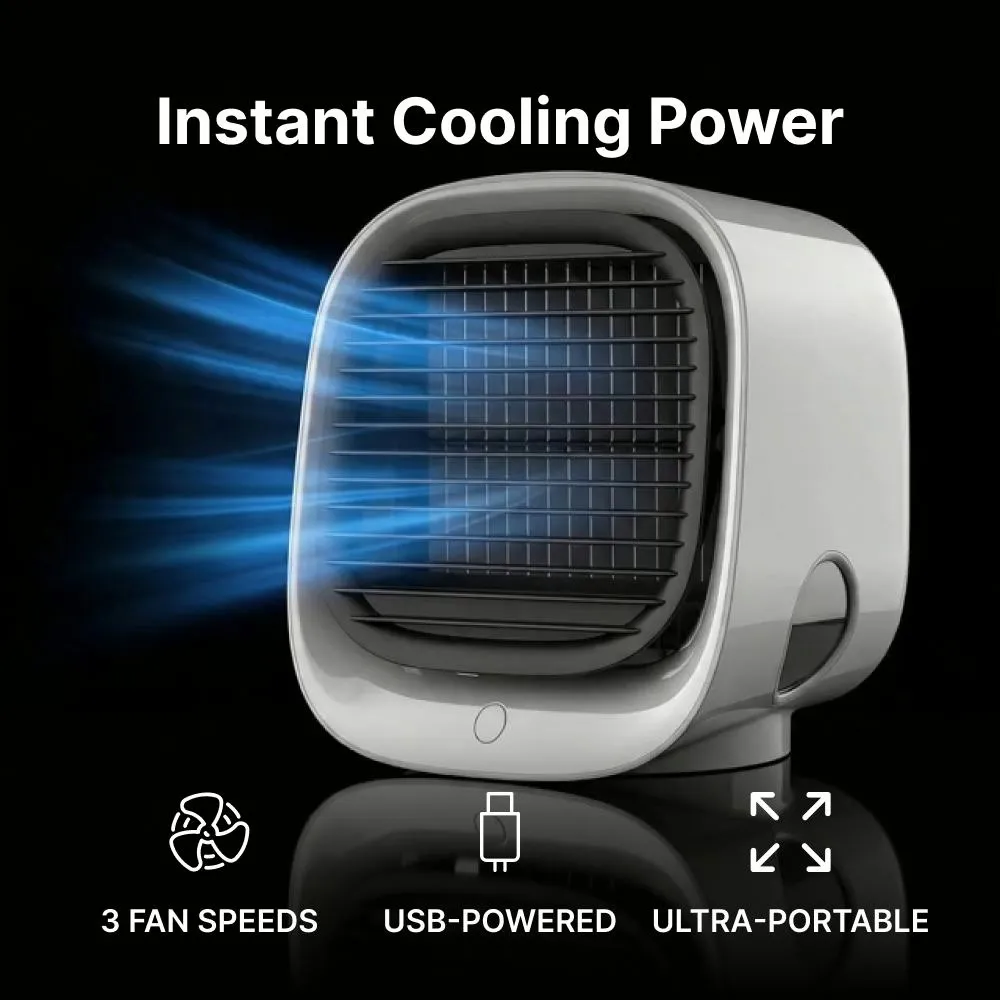
A compact evaporative cooler is one of the few cooling devices that actually travels: it needs no window kit, no exhaust hose and no installation, only water and an outlet. A few tips make it easier:
- Empty the tank before you pack. Let it dry so nothing leaks into your bag.
- Pack it in the car or checked luggage. For flights, check with your airline about bringing small appliances; rules vary by carrier.
- Use bottled or filtered water if the local tap water is very hard, and refill with cool water for the best effect.
- Place it close. On the nightstand or desk, aimed at you, with a window cracked so the moist air can escape.
- Mind the humidity. In very humid destinations, use it on the fan setting and lean on the AC or a ceiling fan.
New to evaporative cooling? Start with how to use a portable air cooler for colder air and the science in do evaporative air coolers actually work?
Keep Yourself Cool, Too
- Drink water through the day, especially after a flight or a long drive.
- Plan outdoor time for mornings and evenings in hot destinations.
- Take a cool shower before bed to bring your skin temperature down.
- Know the warning signs of heat illness. Dizziness, confusion, nausea, a racing heart or no longer sweating mean you need to cool down right away and seek medical help.
Our Recommendation: AiraBreeze
For travelers who want to bring their own comfort, AiraBreeze is the personal air cooler we recommend. It is made for exactly the spaces you end up in on a trip: a hotel nightstand, a rental bedroom, an RV or a family guest room. Fill the tank, plug it in and cool air reaches you in about 90 seconds.
- Cool air in about 90 seconds: no window kit, no venting, no installation.
- Lightweight and compact: easy to carry with one hand and to pack for a road trip.
- Personal, small-space cooling: designed for spaces up to 215 sq ft, including RVs and guest rooms.
- Up to 8 hours per fill: enough for a full night in an unfamiliar room.
- 3 fan speeds, quiet operation: a steady breeze on low will not keep you awake.
- Low running cost: a small fan and water pump instead of a compressor.
Owners rate it 4.7/5 across 1,888+ reviews, and 97% say they would recommend it. The official site is currently offering 75% OFF, and every order comes with a 30-day money-back guarantee. To be clear about what it is: AiraBreeze is an evaporative cooler for personal, small-room comfort, not a replacement for central air, and it works best in drier air with a window cracked. For specs and owner feedback, read our full AiraBreeze review.
Frequently Asked Questions
How do I keep a hotel room cool at night?
Keep the curtains closed during the day, ask the front desk to check or replace a weak AC unit, and aim any fan or personal cooler directly at the bed. Light sleepwear and a thin sheet instead of a heavy duvet also help.
Can I bring a portable air cooler on a trip?
Yes, a compact personal cooler is easy to take on a road trip or to an RV, rental or family home. Empty and dry the tank before packing. For flights, check with your airline about bringing small appliances, since rules vary by carrier.
Does an evaporative cooler work in Florida or other humid places?
Evaporative coolers work best in dry to moderate humidity. In very humid weather they add less cooling, so use them on the fan setting and rely on AC or a ceiling fan as well. In dry destinations such as Arizona or Nevada they are very effective.
How do I keep an RV cool without running the AC all night?
Park in the shade, face the windshield away from the afternoon sun, use reflective window covers, open roof vents when the outside air cools and use a low-power personal cooler or fan in the sleeping area.
Is a personal cooler a replacement for air conditioning?
No. A personal evaporative cooler is made to cool the person and the space around them, not a whole house. In a heat wave or extreme heat, AC or an air-conditioned public place comes first.
New here? Browse more honest home-product reviews on our Review Elite home page, or read how to cool a hot room: an if-then guide.