How to Choose a Portable Air Cooler: 7 Things to Check Before You Buy
The Short Answer
Choose a portable air cooler by matching seven things to the room you will actually use it in: the room-size rating, how long the tank runs, how many fan speeds it has, how quiet it is on low, whether it filters the air, how easy it is to carry, and whether it comes with a real money-back guarantee. Get those right and the cooler feels like genuine relief instead of "just a fan." The unit that passes all seven for us is the AiraBreeze.
Portable air coolers all look similar in a product listing: a box with a vent, a tank and a couple of buttons. Yet owner reviews split sharply into "best summer purchase I've made" and "it's basically a fan." In our experience, the difference is rarely luck. It comes down to whether the buyer checked a handful of specs before clicking buy. This guide walks through those specs in plain English, in the order that matters, and ends with the cooler we'd put our own money on.
The 7-Point Checklist
1. Room-Size Rating: Match It to the Room You'll Really Use
Every honest manufacturer states the space the cooler is designed for. Read it, then measure your room (length times width). A typical bedroom or home office in the US is roughly 120 to 200 square feet, so a cooler rated for about 200 square feet or more is the right class. A unit rated for 80 square feet will disappoint in a master bedroom; a unit rated for 500 square feet is bulkier, louder and more than you need next to a bed.
What to avoid: listings that give no room rating at all, or only a vague "cools large areas." If the maker won't name a number, assume the number is small.
2. Tank Runtime: One Fill Should Cover a Night or a Work Day
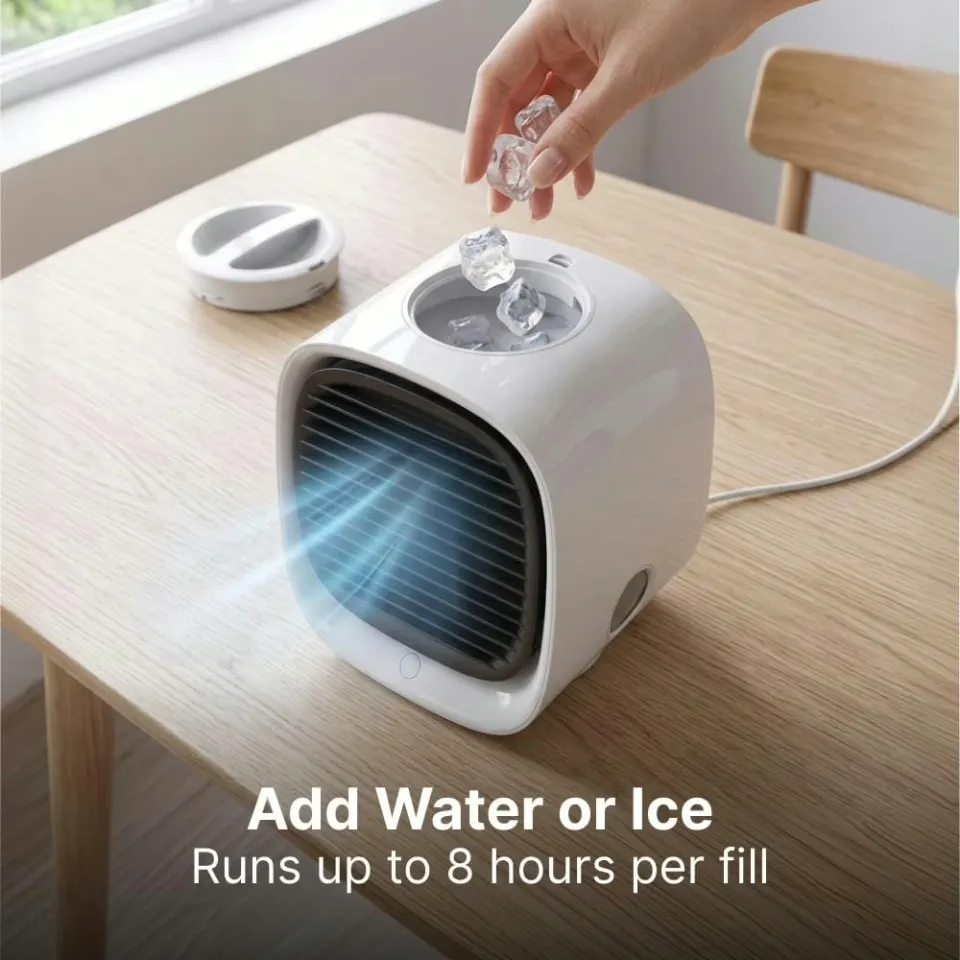
The tank is where cheap coolers quietly fail. A small tank means the cooling stops at 2 a.m. and the unit turns into a plain fan until you get up and refill it. Look for a runtime of roughly 8 hours per fill, which is a full night's sleep or a full day at the desk. Bonus points if the tank accepts ice, because ice water gives you a colder stream on the hottest afternoons. Our 9 tips for colder air explain how to get the most out of every fill.
3. Fan Speeds: You Need at Least Three
One speed is a compromise all day long: too loud to sleep next to, or too weak to feel at your desk. Three speeds let you run low and quiet at night, medium while you work, and high for the brutal 4 p.m. heat. It sounds like a small thing until the first night you want the cooling without the noise.
4. Noise on the Lowest Setting
Most people end up using a portable cooler in the bedroom, so the question isn't "how loud is it on high" but "can I sleep next to it on low." Since few makers publish decibel figures, the best evidence is owner feedback: look for reviews that mention running it on the nightstand all night. If nobody mentions sleep, that tells you something too.
5. Filtration and Air Quality
Because an evaporative cooler pulls room air through a wet filter, it has a natural chance to clean the air as well as cool it. Better units make a point of this: a built-in filter that traps dust and particles, plus the gentle humidifying effect that leaves the air fresher instead of dried out. If you've ever woken up with a scratchy throat from AC, this is the spec that fixes it. A model like the AiraBreeze portable air cooler filters and humidifies as it cools, which is one reason owners describe the air as "fresher," not just cooler.
6. Portability: Can You Carry It With One Hand?
The whole promise of a portable cooler is that it follows you: desk by day, bedside by night, maybe the RV on the weekend. A unit that needs two hands and a clear path through the house ends up living in one room. Check the weight, the handle and whether it needs any installation at all. The right answer is plug-and-play: fill, plug in, press a button.
7. Guarantee and Where You Buy
Evaporative cooling depends on your climate and your room, so the fairest way to judge a cooler is in your own home. That makes a money-back guarantee the most important line in the listing. A 30-day guarantee from the official site means you can test it through a real heat wave. Marketplace listings from unknown sellers often have no such protection, and some sell look-alikes under similar names, so buy from the manufacturer's official page.
The Checklist at a Glance
| What to check | Look for | Red flag |
|---|---|---|
| Room-size rating | About 200 sq ft for a bedroom or office | No number given |
| Tank runtime | Around 8 hours per fill, accepts ice | "Several hours" or a tiny tank |
| Fan speeds | 3 or more | Single speed |
| Noise on low | Owners sleep next to it | Nobody mentions sleep |
| Air quality | Built-in filter, humidifies | Bare fan over a water tray |
| Portability | One-hand carry, no installation | Heavy, hoses or window kits |
| Guarantee | 30-day money-back, official site | No returns, unknown marketplace seller |
3 Mistakes That Lead to "It's Just a Fan" Reviews
- Expecting an air conditioner. An evaporative cooler is not AC and isn't meant to replace central air. It's personal and small-room cooling, and judged on that basis it's excellent. If you're still deciding between the two categories, our portable cooler vs. AC vs. fan comparison settles it.
- Buying on price alone. The cheapest units cut exactly the things on this checklist: tank, speeds, filter, guarantee. You save a little and use it a lot less.
- Running it in a sealed room. Evaporative cooling needs a little airflow to carry moist air out, so crack a window. Our explainer on whether evaporative coolers actually work covers the humidity question in detail.
Our Recommendation: AiraBreeze
We put this checklist together by looking at what separates coolers people keep from coolers people return. Run AiraBreeze through all seven points and it passes every one, which is why it's the portable air cooler we recommend.
- Room-size rating: designed for spaces up to 215 sq ft, the size of a typical bedroom, home office or dorm room.
- Tank runtime: up to 8 hours per fill, so one fill covers the night; add ice for an extra-cold stream on the worst days.
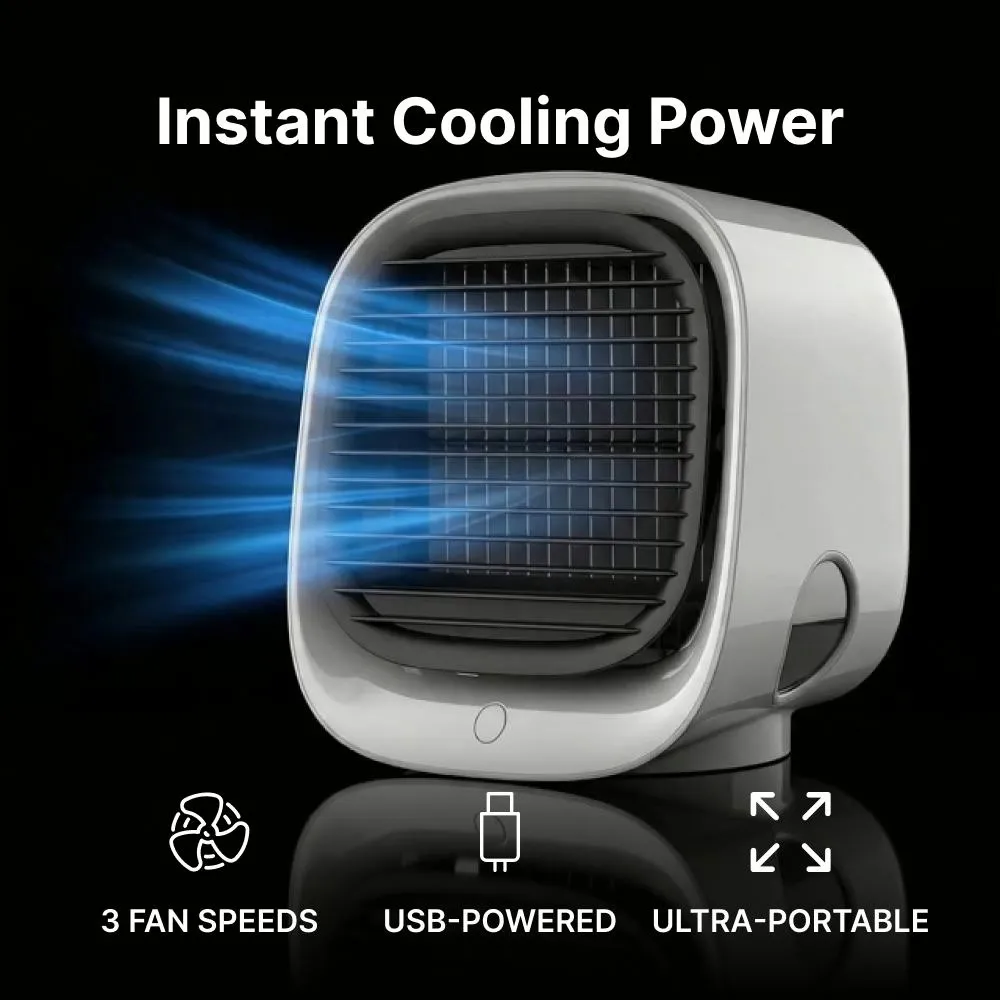
- Fan speeds: 3 settings, low for sleeping, medium for working, high for punishing afternoons.
- Noise: owners consistently run it on the nightstand all night, the toughest quietness test there is.
- Air quality: filters and purifies as it cools, and humidifies instead of drying the air.
- Portability: lightweight, one-hand carry, zero installation. Fill, plug in, press the button, and the air turns noticeably cooler in about 90 seconds.
- Guarantee: 30-day money-back guarantee on the official site, so you test it in your own room and your own climate.
Owners rate it 4.7/5 across 1,888+ reviews, and 97% say they would recommend it. The official site is currently offering 75% OFF, and every order comes with the 30-day money-back guarantee. For the complete breakdown of specs, owner feedback and our honest verdict, read our full AiraBreeze review.
Frequently Asked Questions
What size portable air cooler do I need for a bedroom?
Match the maker's room rating to the room you will actually use it in. Most bedrooms and home offices are between 120 and 200 square feet, so a cooler rated for about 200 square feet or more, like AiraBreeze at 215 sq ft, is the right class. Bigger is not better: oversized units are heavier, louder and harder to move.
Is a portable air cooler the same as a portable air conditioner?
No. A portable air conditioner uses a compressor and refrigerant, needs an exhaust hose to a window and draws a lot of power. A portable evaporative air cooler cools by passing air over water, needs no hose or installation, uses a fraction of the electricity and works best with a window slightly open. It's personal and small-room cooling, not a replacement for central air.
How long should the tank on a portable air cooler last?
Look for a runtime that covers a full night or a full work day on one fill, so roughly 8 hours. Shorter tanks mean getting up to refill at 3 a.m. AiraBreeze runs up to 8 hours per fill, and you can add ice for an extra-cold boost.
Do portable air coolers work in humid climates?
They work best in dry air and still give a cooling breeze in moderate humidity, especially with a window cracked so moist air can leave. In very humid weather the temperature drop is smaller, so set expectations accordingly and choose a model with a money-back guarantee so you can test it in your own climate.
Is a cheap portable air cooler worth it?
The cheapest units often have a tiny tank, one fan speed, no filter and no guarantee, which is why many of them get reviewed as "feeling like a fan." A mid-range unit with an 8-hour tank, several speeds, a filter and a 30-day guarantee is the better value, because it's the one you'll actually keep using.
Which portable air cooler does Review Elite recommend?
AiraBreeze. It ticks every box on this checklist: rated for rooms up to 215 sq ft, noticeably cooler air in about 90 seconds, up to 8 hours per tank, 3 fan speeds, built-in filtration, one-hand portability and a 30-day money-back guarantee, with a 4.7/5 rating from 1,888+ owners.
New here? Browse more honest home-product reviews on our Review Elite home page.