Fan vs. Personal Air Cooler for Hot Flashes at Night: Which Helps You Sleep Better?
The Short Answer
For occasional warm spells, a quiet bedside fan is enough. If hot flashes or night sweats wake you often, especially in a dry, heated bedroom in winter, a personal evaporative air cooler aimed at your side of the bed usually feels better: the breeze is cooler and gentler on dry eyes and throat, and it does not chill a partner who runs cold. Neither one treats hot flashes; they are comfort tools. For that job, AiraBreeze is the personal cooler we recommend.
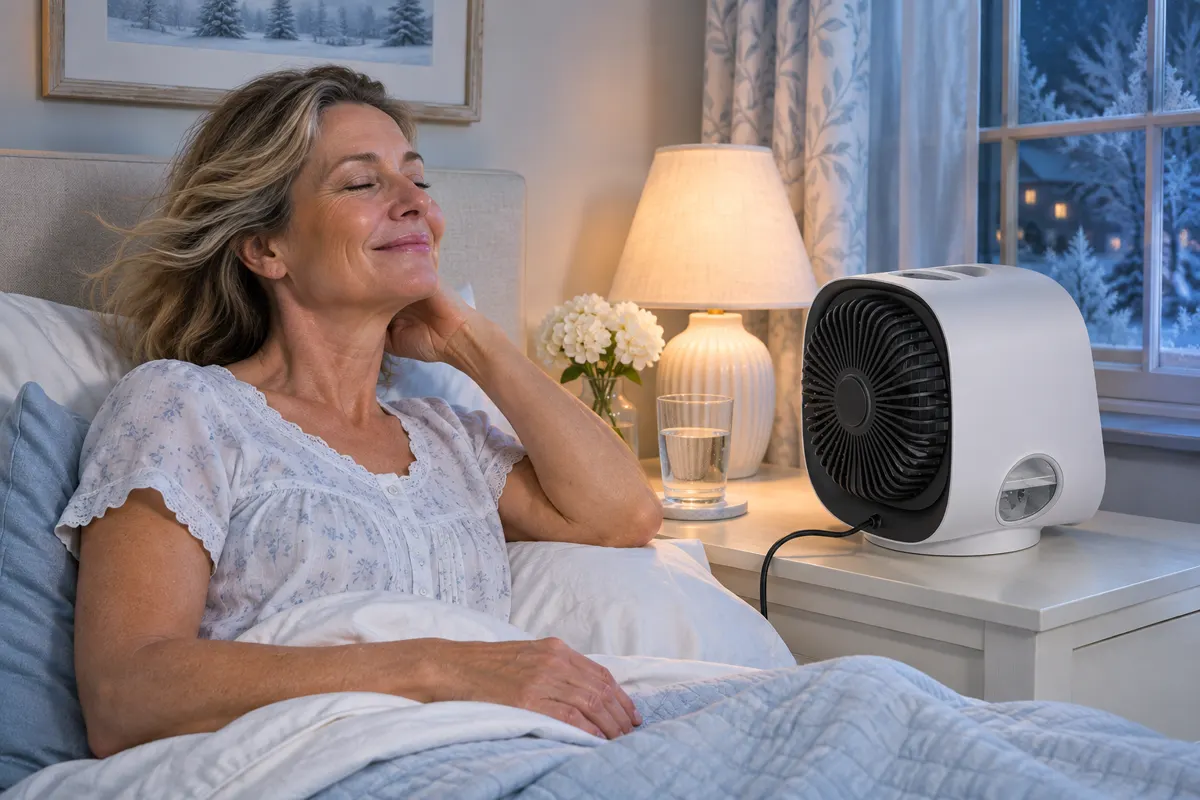
It is a strange feeling to wake up overheated while there is frost on the window. But hot flashes and night sweats do not follow the seasons. In winter they can even feel worse: flannel pajamas, a heavy comforter and the heating running all night trap heat right where you are. Searches for how to stay cool at night with hot flashes keep climbing, and the two tools most women reach for are a bedside fan and a small personal air cooler. Here is how they really compare, for this specific situation.
Why Nights Feel Hotter in Winter
- Heavier bedding: winter comforters hold heat well, which is exactly the problem during a hot flash.
- Heating on all night: the bedroom may be warmer than the cool range sleep experts suggest, often quoted as roughly 60 to 67°F.
- Dry indoor air: heated air tends to be dry, which can leave your throat and eyes uncomfortable when a fan blows on you for hours.
- A partner who runs cold: winter is when the thermostat war heats up. Our guide for hot sleeper, cold sleeper couples covers the bedding side.
How a Fan Cools You
A fan does not lower the temperature of the air; it moves room air across your skin, which helps your body shed heat and feel cooler. It is simple, inexpensive and works in any climate. The downsides at night: the air it moves is the same warm, dry bedroom air, and a strong breeze for hours can dry out your eyes and throat. Many fans are also louder than you expect at 3 a.m.
How a Personal Evaporative Cooler Cools You
A personal evaporative cooler pulls room air through a water-soaked filter. As the water evaporates, it takes heat from the air, so the breeze that comes out feels noticeably cooler and slightly moister than the room. Evaporative cooling works best in dry air, and that is exactly what a heated winter bedroom tends to have. Our guide on whether evaporative coolers actually work explains the science in more detail.
Fan vs. Personal Air Cooler, Side by Side
| What matters at night | Personal air cooler | Bedside fan |
|---|---|---|
| How the breeze feels | Cooler than room air | Room air, moving |
| Dry winter air | Adds a little moisture as it cools | Can dry eyes and throat |
| Works best in | Dry air (heated winter rooms, dry climates) | Any climate |
| Targets one side of the bed | Yes, made for personal space | Yes, but larger fans spread wider |
| Upkeep | Refill the tank; up to about 8 hours per fill | None beyond dusting |
| Best for | Frequent hot flashes, dry bedrooms, a partner who runs cold | Occasional warm spells, humid climates |
The Verdict by Situation
- Hot flashes now and then, mild warmth — a quiet fan on low is often enough.
- Waking up hot several nights a week — a personal evaporative cooler on your nightstand gives a cooler, steadier breeze.
- Heating on, dry winter bedroom — personal cooler. Dry air is where evaporative cooling shines, and the slight moisture is easier on the throat than a dry fan breeze.
- Partner who runs cold — personal cooler aimed only at your side, plus separate bedding.
- Very humid climate in summer — a fan, or air conditioning, because evaporative cooling works less well in humid air.
- Light sleeper — either one on its lowest setting; test the noise before bedtime.
A Cooler-Night Routine for Hot Flashes
- Lower the bedroom temperature a little.Turn the heating down in the bedroom at night, or close the vent, so the room sits at the cooler end of comfortable.
- Layer the bed.A light sheet plus a blanket you can push off in seconds works better than one heavy comforter.
- Choose breathable sleepwear.Light cotton or moisture-wicking fabric instead of flannel.
- Set up your breeze before bed.Fill the cooler or position the fan, aimed at your upper body, on a low setting.
- Keep cold water within reach.A glass of cold water on the nightstand helps you settle back down after a flash.
- Notice your triggers.Many women find late meals, alcohol or a hot shower right before bed make nights warmer.
If hot flashes or night sweats regularly break up your sleep, talk to your doctor: hot flashes are common around menopause, and there are treatment options worth discussing. A fan or cooler is about comfort; it does not replace medical advice. More bedroom ideas are in 7 signs your bedroom is too hot to sleep and is it safe to sleep with an air cooler on?
Our Recommendation: AiraBreeze
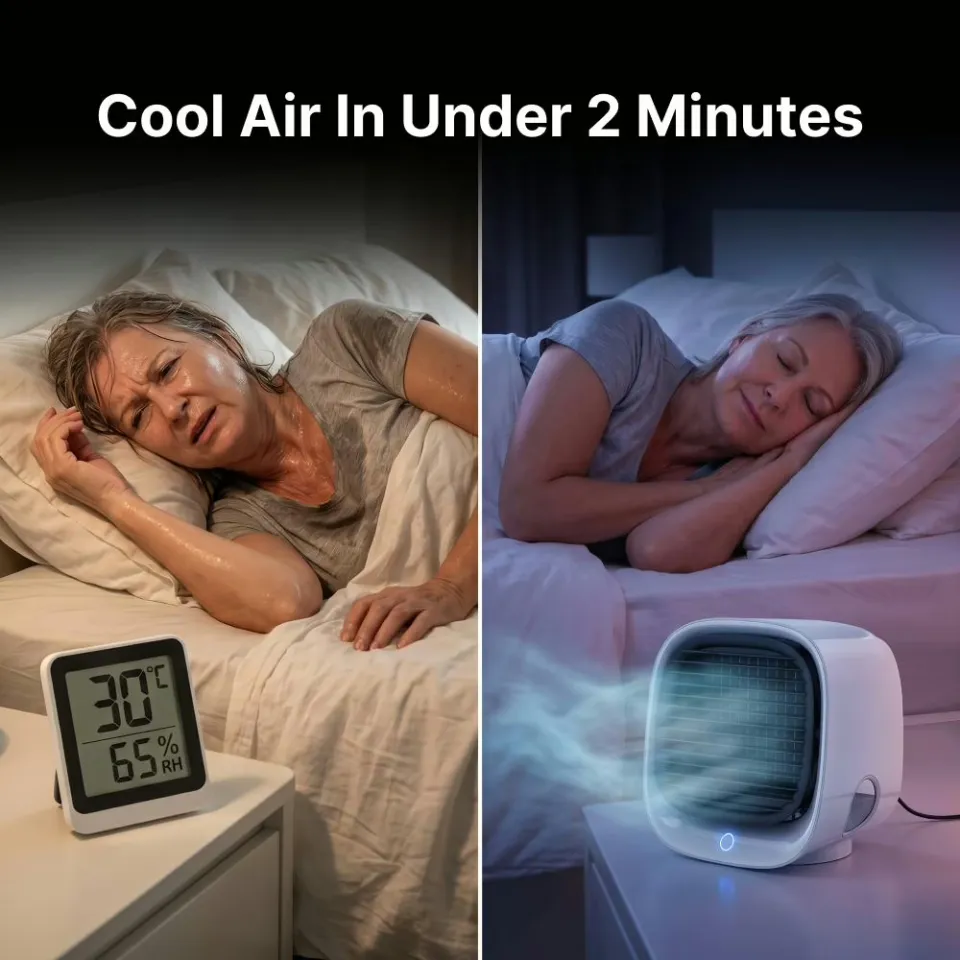
For women who wake up hot at night, AiraBreeze is the personal air cooler we recommend. It is made exactly for the space right around you: on your nightstand it delivers a cool, gentle breeze to your side of the bed, quietly, without turning the room cold for a partner or fighting the heating for the whole house. Fill the tank, plug it in, and cool air reaches you in about 90 seconds.
- Targeted, personal cooling: made for the space right around you, ideal on one nightstand.
- Filters and humidifies as it cools: gentler on the throat than a dry fan breeze in a heated winter room.
- Quiet on low: 3 fan speeds, and the lowest is designed to fade into the background at night.
- Up to 8 hours per fill: enough for a full night without refilling.
- Cool air in about 90 seconds: no window kit, no venting, no installation.
- Lightweight and compact: easy to move from the bedroom to the living room or office.
Owners rate it 4.7/5 across 1,888+ reviews, and 97% say they would recommend it. The official site is currently offering 75% OFF, and every order comes with a 30-day money-back guarantee. To be clear about what it is: AiraBreeze is an evaporative cooler for personal, small-room comfort, not a replacement for central air and not a treatment for hot flashes, and it works best in drier air. For specs and owner feedback, read our full AiraBreeze review.
Frequently Asked Questions
Is a fan or an air cooler better for hot flashes at night?
Both can help you feel more comfortable. A fan moves room air across your skin and is fine for occasional warmth. A personal evaporative cooler pushes air through a water-soaked filter, so the breeze feels cooler and slightly moister, which many people prefer in dry, heated bedrooms in winter. Neither treats hot flashes; they are comfort tools.
How can I stay cool at night with hot flashes?
Keep the bedroom cool, often quoted as roughly 60 to 67 degrees Fahrenheit, wear light breathable sleepwear, use layered bedding you can push off, keep cold water by the bed and aim a gentle breeze from a fan or personal cooler at your side of the bed. If hot flashes regularly disrupt your sleep, talk to your doctor about options.
Why do I get hot flashes at night even in winter?
Hot flashes come from the body, not the weather, so they happen in every season. Winter can even make nights feel worse: heavier bedding, flannel pajamas and the heating running all trap heat around you.
Does an evaporative cooler work in winter?
Evaporative cooling works best in dry air, and heated indoor air in winter is often dry. That makes a personal evaporative cooler well suited to cooling one person in a warm, dry bedroom. It is designed for personal, small-space comfort, not for cooling a whole home.
How do I stay cool at night without making my partner cold?
Use separate bedding and put a fan or personal cooler on your nightstand aimed only at your side, on a low setting. The breeze reaches you and fades before it reaches the other side of the bed.
When should I talk to a doctor about night sweats?
If night sweats are new, severe, come with fever or weight loss, or regularly keep you from sleeping, talk to your doctor. Hot flashes are common around menopause, and there are treatment options a doctor can discuss with you.
New here? Browse more honest home-product reviews on our Review Elite home page, or compare options in portable cooler vs. AC vs. fan. Running hot at work too? Here is how to stay cool at your desk.