How to Keep a Baby's Room Cool, and Every Room as Your Family Grows
The Short Answer
To keep a baby's room cool, block the sun during the day, keep air moving, dress the baby lightly and check the back of the neck, not the hands, for overheating. Any fan or cooler goes across the room, out of reach and never aimed at the crib. As the family grows, the hot room moves: the toddler's room, the teen's gaming den, the home office, a menopause-era bedroom and, later, an older parent who feels the heat more. A quiet personal cooler such as AiraBreeze moves with you from one stage to the next.
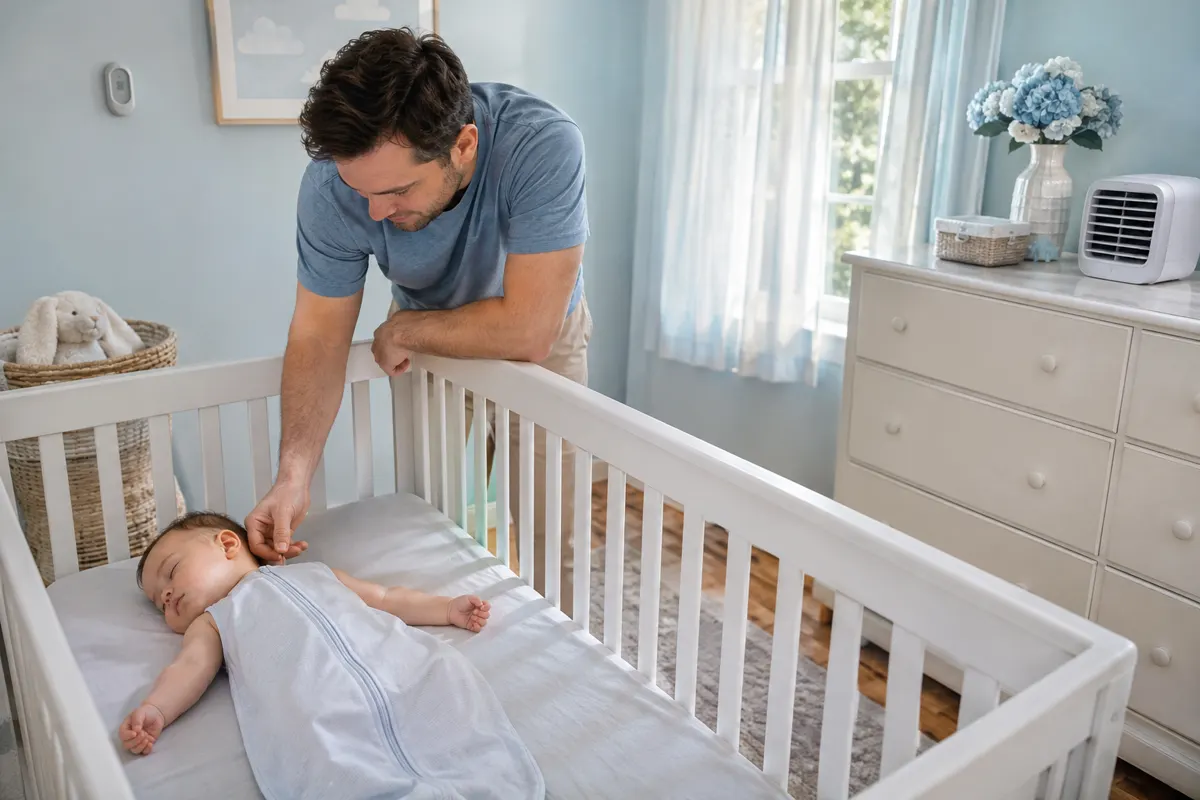
Every home has a hot room, and it changes as life changes. First it is the nursery, where new parents lie awake wondering whether the baby is too warm. A few years later it is the kids' room upstairs, then a teenager's room packed with screens, then the spare room that became your home office. Eventually it may be your own bedroom, or the guest room where an aging parent stays. Here is how keeping cool works at each stage, starting with the question most people search for first.
Stage 1: The Nursery (Babies)
Babies cannot tell you they are hot, and pediatric safe-sleep guidance from the American Academy of Pediatrics specifically warns against overheating. You do not need a thermometer obsession; you need a few habits:
- Check the right spot: feel the back of the neck or the chest. Hands and feet are often cool even when a baby is warm. Sweating, damp hair, flushed cheeks or a heat rash mean too warm.
- Dress lightly: a common rule of thumb is one more light layer than an adult would be comfortable in. In a warm room, a onesie and a light sleep sack is often enough. No hats during sleep, no loose blankets in the crib.
- Block the sun: blackout curtains closed during the hottest part of the day keep the room from heating up before bedtime.
- Keep air moving: a cracked door or gentle airflow through the room helps. Many parents keep the nursery at a temperature that is comfortable for a lightly dressed adult.
- Place devices safely: any fan or personal cooler goes on a stable surface across the room, out of reach, with the cord secured and the airflow aimed at the room, never directly at the baby.
Always follow your pediatrician's advice on your baby's sleep environment, and call them if your baby seems unwell in the heat.
Stage 2: Toddlers and Kids' Rooms
Once kids are in a bed of their own, the challenge becomes the location of their room. Kids' rooms are often upstairs, where heat rises and collects (see why is my upstairs so hot?). Kids also run warm after active play and often kick off covers at night.
- Cool the room before bedtime instead of trying to fix it at midnight.
- Lighter bedding in layers they can push off themselves.
- Water by the bed on warm nights.
- Keep devices kid-proof: a cooler with a closed tank on a dresser, not on the floor where little hands reach it.
Stage 3: The Teen Room
Teen rooms are hot for a different reason: electronics. A gaming console, a PC, monitors and a pile of chargers all release heat, the door is usually shut, and teens are awake late, when the top floor is at its warmest. Switching devices off when not in use, cracking the door and giving them their own personal cooler at the desk or bedside solves most of the complaints. Our guide to signs your bedroom is too hot to sleep applies to teens too.
Stage 4: The Home Office
When a spare room becomes an office, it gains a computer, a monitor, sometimes a printer and one person sitting still for eight hours, often by a sunny window. The rest of the house can feel fine while the office is stuffy. A personal cooler on the desk cools the one person who needs it instead of the whole house. More tips in how to stay cool at your desk.
Stage 5: Menopause, Couples and the Empty Nest
For many couples, the hot-room problem comes back in their own bedroom. Night sweats and hot flashes around menopause are common, and partners often disagree about the ideal temperature. A cooler on one side of the bed lets one person stay cool without freezing the other. We cover both in fan vs. personal air cooler for hot flashes and hot sleeper, cold sleeper.
Stage 6: Older Parents
According to the CDC, adults aged 65 and older are more prone to heat-related health problems. The body adjusts less well to sudden changes in temperature, some medications affect how it handles heat, and older people may not notice that they are getting too warm. If an aging parent lives with you or nearby, check on them on hot days, make sure they drink water, and give them a cool room to rest in. A simple, quiet personal cooler with easy controls is often more welcome than a noisy fan.
How Cooling Needs Change: At a Glance
| Stage | Why the room gets hot | What helps most | Watch out for |
|---|---|---|---|
| Baby (nursery) | Sun, heavy layers, closed room | Blackout curtains, light sleep sack, airflow | Overheating; devices aimed at the crib |
| Toddler / kids | Upstairs heat, active play | Pre-cool before bed, light layers | Cords and tanks within reach |
| Teen | Consoles, PCs, closed door | Devices off, cracked door, desk cooler | Late-night heat upstairs |
| Home office | Computer heat, sun, sitting still | Personal cooler on the desk | Cooling the whole house for one person |
| Couples / menopause | Hot flashes, different preferences | A cooler on one side of the bed | Thermostat wars |
| Older parents | Body adjusts less to heat, medicines | A cool room, water, regular check-ins | Not noticing overheating |
One Device That Grows With the Family
Look at the table and a pattern appears: the hot room keeps moving, but the fix is almost always cooling the person or the small space they are in, not the whole house. That is exactly what a personal evaporative cooler is designed for, and why it can follow a family from the nursery dresser to the teen's desk to an older parent's bedside. Not sure how it compares with a fan or AC? See portable cooler vs. AC vs. fan, and for safe night use read is it safe to sleep with an air cooler on?
Our Recommendation: AiraBreeze
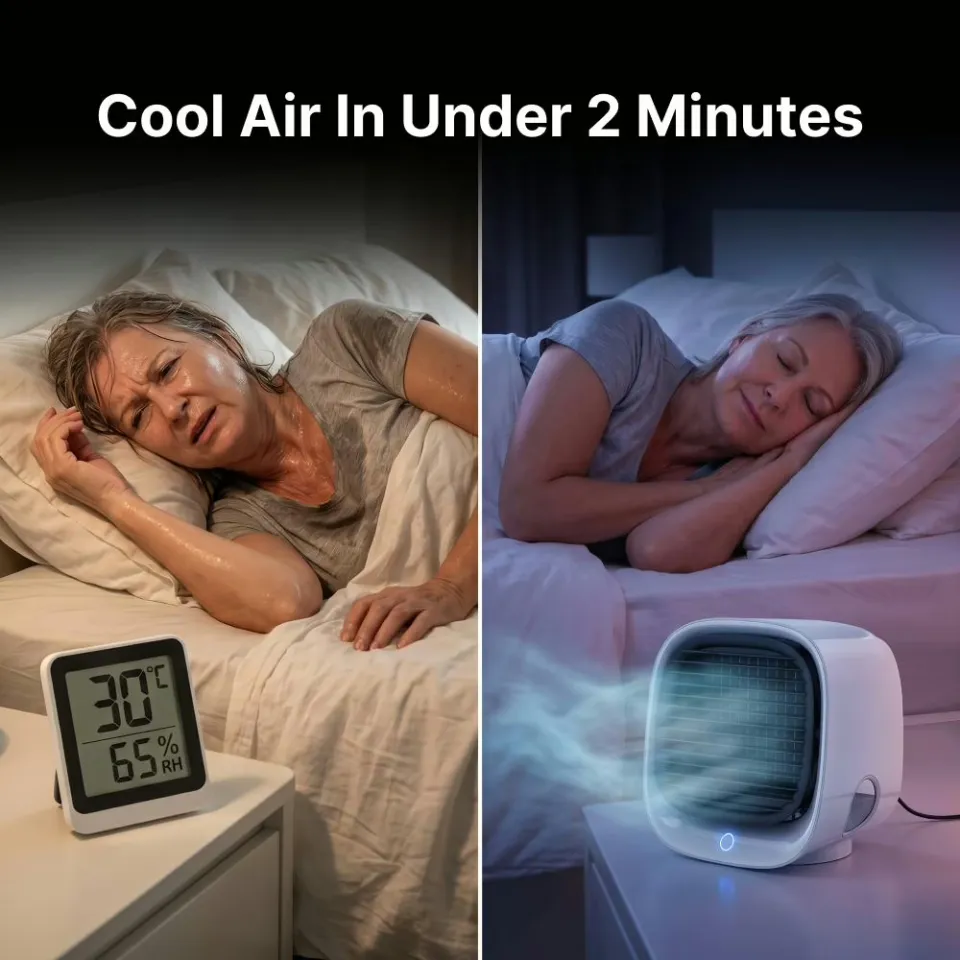
For a family whose hot room keeps changing, AiraBreeze is the personal air cooler we recommend. It is designed to filter, cool and humidify the air in the space around one person, it is light enough to carry from room to room, and its low setting is quiet enough for a sleeping household. Today it can sit across the nursery; in a few years it can sit on a teenager's desk, in your home office or at an older parent's bedside.
- Filters, cools and humidifies: one compact device for warm, stuffy rooms.
- Personal, targeted comfort: cools the space you are in instead of the whole house.
- Quiet on low: 3 fan speeds, with a low setting suited to sleep.
- Up to 8 hours per fill: enough for a full night or workday.
- Ready in about 90 seconds: fill the tank, plug it in, done.
- Lightweight and compact: easy to move as your family's needs change.
Owners rate it 4.7/5 across 1,888+ reviews, and 97% say they would recommend it. The official site is currently offering 75% OFF, and every order comes with a 30-day money-back guarantee. AiraBreeze is an evaporative cooler for personal, small-space comfort, not a replacement for central air, and it works best in drier air. Around babies and young children, always place it out of reach and follow the manufacturer's instructions. For specs and owner feedback, read our full AiraBreeze review.
Frequently Asked Questions
How do I keep my baby's room cool?
Block direct sun with blackout curtains during the day, keep the door open or air moving through the room, dress the baby in light layers or a light sleep sack, and use a fan or personal cooler placed safely across the room, never pointed directly at the baby and with the cord out of reach. Check the back of the baby's neck or chest: sweaty or hot skin means the baby is too warm.
How can I tell if my baby is too hot?
Feel the back of the neck or the chest rather than the hands and feet, which are often cool. Sweating, damp hair, flushed cheeks, a heat rash or fast breathing are signs the baby is too warm. Remove a layer and cool the room. Pediatric safe-sleep guidance warns against overheating, so dress babies lightly and avoid hats and heavy blankets during sleep.
Is it safe to use an air cooler in a baby's room?
A personal air cooler can help make a warm nursery more comfortable if you place it safely: on a stable surface across the room, out of the baby's reach, with the cord secured, aimed at the room rather than at the crib, and with fresh water and a clean, dry tank. Keep indoor humidity below about 50 percent and talk to your pediatrician if you have questions about your baby's sleep environment.
Do older adults feel heat differently?
Yes. According to the CDC, adults aged 65 and older are more prone to heat-related health problems, partly because the body adjusts less well to sudden temperature changes and some medicines affect how the body handles heat. Older parents may also not notice they are overheating, so it helps to check on them on hot days.
Why is my teenager's room always so hot?
Gaming consoles, computers, monitors and chargers all release heat, rooms are often kept closed, and teens tend to stay up late when the upstairs is warmest. Switching devices off when not in use, cracking the door for airflow and a personal cooler at the desk or bedside usually help.
New here? Browse more honest home-product reviews on our Review Elite home page, or read how to cool a hot room: an if-then guide.