Can an Evaporative Cooler Be Used as a Humidifier? Dry Winter Air, Explained
The Short Answer
Yes, partly: an evaporative cooler always adds moisture to the air, because evaporating water is how it cools. In a warm, dry, heated room (an overheated apartment, an office, a bedroom next to a radiator) that moisture can make the air feel noticeably more comfortable. It is not a full replacement for a dedicated humidifier, since it also cools and most personal models have no humidity control, but for the space right around you it does both jobs at once. That is exactly how AiraBreeze works: it filters, cools and humidifies the air you breathe.

Most people file an “air cooler” under summer and store it in the garage in October. But there is an unexpected link between cooling and winter comfort: dry air. Heating systems warm the air without adding water, so many homes and offices end up both too warm and too dry by December. Chapped lips, a scratchy throat in the morning, static shocks and dry eyes are the familiar signs. An evaporative cooler happens to address both halves of that problem, because the way it cools is by adding moisture. Here is how that works, when it helps and how to do it right.
Why Winter Air Gets So Dry Indoors
Cold outdoor air holds very little water. When it leaks inside and gets heated, its relative humidity drops sharply, because warm air can hold much more moisture than it actually contains. Forced-air heating and radiators make the effect stronger, and closed windows keep it that way all day. The result is a room that can feel warm, stuffy and dry at the same time, and many apartments are overheated on top of that (see why is my apartment so hot in winter?).
- Lips and skin: dry, tight or cracked, even with lotion.
- Nose and throat: dry or scratchy on waking.
- Static: small shocks from door handles and blankets.
- Wood and plants: houseplants with crispy leaf tips, wooden floors with small gaps.
How an Evaporative Cooler Adds Moisture
An evaporative cooler pulls room air through a water-soaked filter. As water evaporates, it absorbs heat from the air, so the breeze that comes out is cooler, and it also carries the evaporated water with it. In other words, every evaporative cooler is also a mild humidifier by design. That is why these coolers work best in dry climates in summer, and it is the same reason they can help in dry, heated rooms in winter. A dedicated evaporative humidifier works on a very similar principle, with a wick and a fan; the difference is that a humidifier is designed to add moisture without a cooling breeze, and often has a humidistat.
When It Makes Sense to Run a Cooler in Winter
| Your situation | Does a cooler help? | How to use it |
|---|---|---|
| Overheated apartment, can’t control the radiator | Yes — cools and adds moisture | Low fan, aimed at you, room-temperature water |
| Warm, dry office with heating on all day | Yes — personal comfort at the desk | Low speed, on your own desk |
| Hot kitchen while cooking | Yes — a cool, slightly humid breeze | Short sessions, away from the stove |
| Cold room that already feels chilly | No — you need warmth, not a breeze | Use a dedicated humidifier instead |
| Humidity already above 50–60% | No — risk of condensation | Ventilate; skip added moisture |
The Humidity Range to Aim For
The U.S. Environmental Protection Agency recommends keeping indoor relative humidity below 60%, ideally between 30% and 50%. Too dry and you feel it in your skin, eyes and throat; too humid and moisture can condense on cold windows and walls, which invites mold and dust mites. A basic hygrometer costs little and takes the guesswork out: add moisture when it reads in the 20s, stop when it reaches the 40s.
How to Use a Personal Cooler as a Winter Humidifier
- Check the room first.Use it in a room that feels warm and dry, not in one that is already cold.
- Use room-temperature water, no ice.In winter you want moisture and a gentle breeze, not a chill.
- Start on the lowest fan speed.Low speed means a soft breeze and quiet operation, ideal for a bedroom or desk.
- Aim it at your own space.On a nightstand or desk, angled toward you rather than across the room.
- Watch the windows.Fogged or wet windows mean the room has enough moisture; switch off and ventilate.
- Empty and dry the tank daily.Fresh water every time and a dry tank between uses keep the filter clean. Full care steps are in how to clean a portable air cooler.
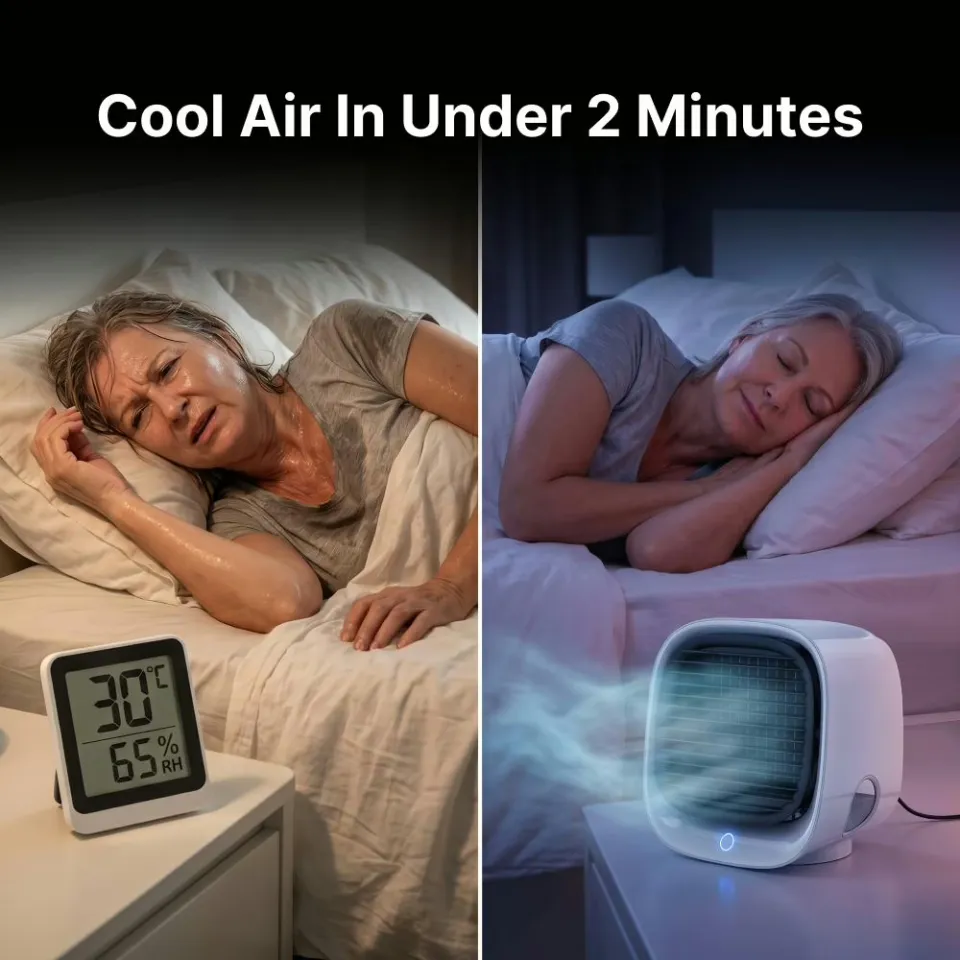
Cooler vs. Humidifier: Which Do You Need?
If your room is cold and dry, a dedicated humidifier is the right tool. If your room is warm and dry, which describes many overheated apartments, offices and bedrooms next to a radiator, a personal evaporative cooler is the more useful device, because it solves both problems in the space around you, and it keeps working for you all summer. Our comparison portable cooler vs. AC vs. fan explains where evaporative cooling shines, and how to use a portable air cooler has more setup tips.
Our Recommendation: AiraBreeze
For warm, dry rooms in winter, and for every hot room in summer, AiraBreeze is the personal air cooler we recommend. It is designed to filter, cool and humidify the air right around you, so on a nightstand or desk it softens dry heated air while it delivers a gentle breeze, quietly and without venting or installation. It is the easiest way to turn a stuffy, overheated room into a comfortable one.
- Filters, cools and humidifies: one compact device for warm, dry air.
- Personal, targeted comfort: made for one person’s space, ideal for a bedside table or desk.
- Quiet on low: 3 fan speeds, with a low setting suited to sleep and calls.
- Up to 8 hours per fill: enough for a full night or workday.
- Ready in about 90 seconds: fill the tank, plug it in, done.
- Lightweight and compact: easy to move between bedroom, office and kitchen.
Owners rate it 4.7/5 across 1,888+ reviews, and 97% say they would recommend it. The official site is currently offering 75% OFF, and every order comes with a 30-day money-back guarantee. To be clear about what it is: AiraBreeze is an evaporative cooler for personal, small-space comfort, not a replacement for central air or a whole-house humidifier, and it works best in drier air. For specs and owner feedback, read our full AiraBreeze review.
Frequently Asked Questions
Can an evaporative cooler be used as a humidifier?
Partly, yes. An evaporative cooler works by evaporating water into the air, so it always adds some moisture while it runs. In a warm, dry, heated room that extra moisture can make the air feel more comfortable. It is not a dedicated humidifier: it also cools the air, it has no built-in humidity control in most personal models, and it works best for the space right around you.
Do evaporative coolers add humidity to a room?
Yes. Evaporating water is how they cool, so the air coming out is slightly cooler and more humid than the air going in. That is why evaporative coolers work best in dry air and feel less effective on humid days.
What indoor humidity level is best in winter?
The U.S. EPA recommends keeping indoor relative humidity below 60 percent, ideally between 30 and 50 percent. A simple hygrometer shows where your room stands, so you add moisture only when the air is actually dry and avoid condensation on cold windows.
Is it OK to run an air cooler in winter?
Yes, in rooms that run warm and dry, such as overheated apartments, offices, kitchens or bedrooms near a radiator. Use room-temperature water instead of ice, start on a low fan speed, aim it at yourself rather than the whole room, and empty and dry the tank regularly.
Can too much humidity be a problem?
Yes. Above roughly 60 percent, moisture can condense on cold windows and walls and encourage mold and dust mites. Watch for fogged windows, keep an eye on a hygrometer and ventilate when needed.
New here? Browse more honest home-product reviews on our Review Elite home page, or read how to stay cool at your desk.