The History of Evaporative Cooling: From Ancient Water Jars to Personal Air Coolers
The Short Answer
Evaporative cooling is the oldest cooling technology there is: when water evaporates, it takes heat with it. For thousands of years people used it through porous water jars, wet mats in doorways and, in Persia, windcatcher towers and underground water channels. In the early 20th century, Arizona turned the idea into the home “swamp cooler,” until refrigerated air conditioning took over after World War II. Today the same principle is back in a small, plug-in form: the personal evaporative air cooler, such as the AiraBreeze, which cools the space right where you are for a fraction of the power of an AC.
Air conditioning feels so normal that it is easy to forget it is barely a century old in homes. For most of human history, staying cool in a hot climate meant working with three things: shade, moving air and water. The last of these is the one that actually lowers the temperature of the air you feel, and the story of how people used it is a surprisingly clever one. Here it is, from the ancient world to the device on your nightstand, with the tradition separated from what we know today.
The Science in One Paragraph
Water needs energy to turn from liquid into vapor. When it evaporates from a wet surface, it pulls that energy, as heat, out of the surface and the air around it. That is why you feel cold stepping out of a pool on a breezy day, and why sweat cools your skin. Move dry air across something wet and the air that comes out the other side is cooler. The drier the air, the more water it can absorb, and the stronger the effect. That last point explains almost the entire history that follows: evaporative cooling thrived in dry, hot regions and struggled in humid ones. We go deeper in do evaporative air coolers actually work?
Ancient Egypt and the Clay Water Jar
One of the earliest and simplest uses of evaporation is the unglazed clay jar. Water slowly seeps through the porous walls, evaporates from the outside and keeps the water inside noticeably cooler than the air. Versions of the porous water jar have been used across North Africa, the Middle East and South Asia for millennia, and many households in hot countries still use them. Historians also point to Egyptian imagery of servants fanning large water containers, the same principle of moving air across water, applied to a room.
Persia: Windcatchers, Qanats and Desert Ice
The most impressive ancient cooling systems came from the Iranian plateau. Windcatchers (badgirs) are tall towers that catch the breeze and send it down into the building. In some designs, the air was led over water from a qanat, an underground channel that carried water from distant hills, so it cooled by evaporation before reaching the rooms below. Persian builders also used shaded pools, thick walls and domed ice houses that stored winter ice into summer. Several of these structures still stand in cities such as Yazd, and architects study them today as examples of cooling without electricity.
India: Wet Grass Mats in the Doorway
In the hot, dry months of northern India, a long-standing tradition was to hang mats woven from fragrant khus (vetiver) grass in doorways and windows and keep them wet. Hot wind passing through the damp mat came out cooler and carried a pleasant earthy scent. It is, quite literally, the same design as the pad in a modern evaporative cooler: a wet, porous material with air pushed through it.
Arizona and the Birth of the Swamp Cooler
The modern home evaporative cooler is largely an American Southwest invention. In Phoenix in the early 20th century, local accounts credit early drip-type coolers: water trickled over pads of excelsior (wood shavings) or similar material while a fan pushed air through them into the house. In the 1930s the idea spread fast across Arizona: residents built their own from published plans, including designs associated with the University of Arizona, and local manufacturers began selling factory-built units. By the late 1930s Phoenix was often described as the swamp cooler capital of the country, and by the early 1950s the large majority of Arizona homes are said to have used one.
The nickname “swamp cooler” is usually explained by the musty smell of early units whose wet pads were not kept clean, and by the humid feel of the air they blew. Clean water and maintained pads solve that, as we explain in how to clean and store a portable air cooler.
Refrigerated AC Takes Over
In 1902, engineer Willis Carrier designed a system to control temperature and humidity for a printing plant in Brooklyn, and refrigerated air conditioning grew from there: first factories and movie theaters, then offices, and after World War II, homes. Refrigerated AC had two big advantages: it works in humid climates and it removes moisture from the air. As window units and central systems became affordable in the 1950s and 1960s, most American homes switched, and the evaporative cooler became a niche product mainly used in the dry West.
The trade-off came later into view: compressor-based AC uses a lot of electricity, needs installation, and cools whole rooms or houses even when only one person needs it. We compare the options side by side in portable cooler vs. AC vs. fan.
Then and Now: What Each Era Solved
| Era | How it worked | What it solved | Its limit |
|---|---|---|---|
| Porous clay jar | Water seeps out and evaporates | Cool drinking water with no energy | Cools water, not the room |
| Windcatcher + qanat | Breeze led over water into the building | Whole-building cooling in the desert | Needs special architecture and a water source |
| Wet khus mats | Hot wind through a wet grass mat | Cooler, scented air in a room | Constant re-wetting, works only with wind |
| Arizona swamp cooler | Fan pushes air through wet pads | Affordable whole-home cooling in dry climates | Bulky, roof or window installation, pad upkeep |
| Refrigerated AC | Compressor and refrigerant | Cooling in any climate, dehumidifies | High power use, installation, cools whole spaces |
| Personal evaporative cooler (today) | Small fan, pump and water tank | Plug-in cooling right where you sit or sleep, low power | Best in drier air; personal, not whole-house |
What Tradition Got Right, and What We Know Today
- Cool the person, not the whole building. The water jar and the wet mat worked at human scale. Today we know that cooling the spot where you are is far cheaper than cooling an entire house; see how to stay cool without AC.
- Air movement matters as much as water. Windcatchers and fanned jars both moved air. A cooler without a breeze does little; a breeze across water does a lot.
- Dry air is your friend. Every successful tradition came from a dry climate. In humid weather the effect is smaller, and a cracked window helps.
- Keep it clean. The swamp cooler’s reputation came from neglected pads. Fresh water and a clean tank keep the air fresh.
Our Recommendation: AiraBreeze
If the long history of evaporative cooling teaches anything, it is that water and moving air can keep a person comfortable with very little energy. AiraBreeze is the modern version of that idea that we recommend: the wet mat and the fanned water jar, rebuilt as a compact device that sits on your desk or nightstand.
- Cool air in about 90 seconds: fill the tank, plug it into any outlet, press a button. No window kit, no venting, no installation.
- Personal, small-space cooling: designed for spaces up to 215 sq ft, the human-scale cooling that tradition got right.
- Carry it room to room: lightweight enough to move from the desk by day to the bedside at night with one hand.
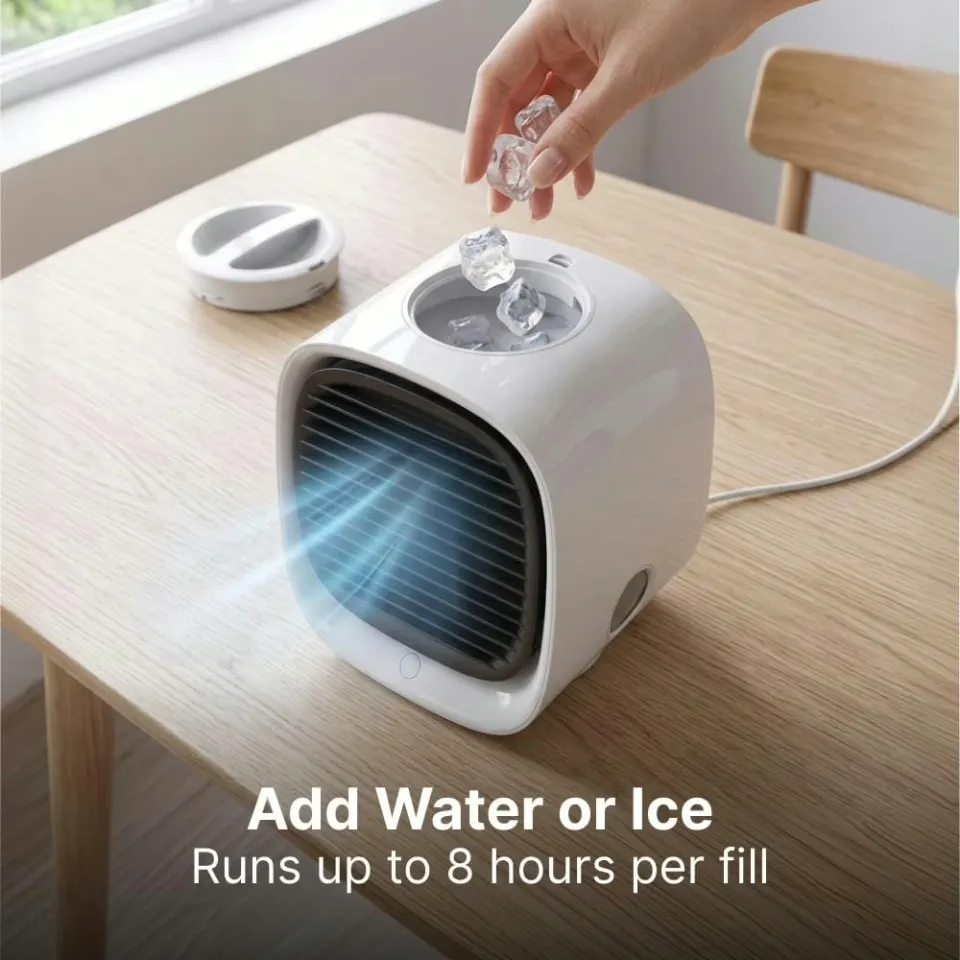
- Up to 8 hours per fill: enough for a full night’s sleep without refilling.
- 3 fan speeds, quiet operation: a steady breeze on low will not keep you awake.
- Low running cost: a small fan and water pump instead of a compressor.
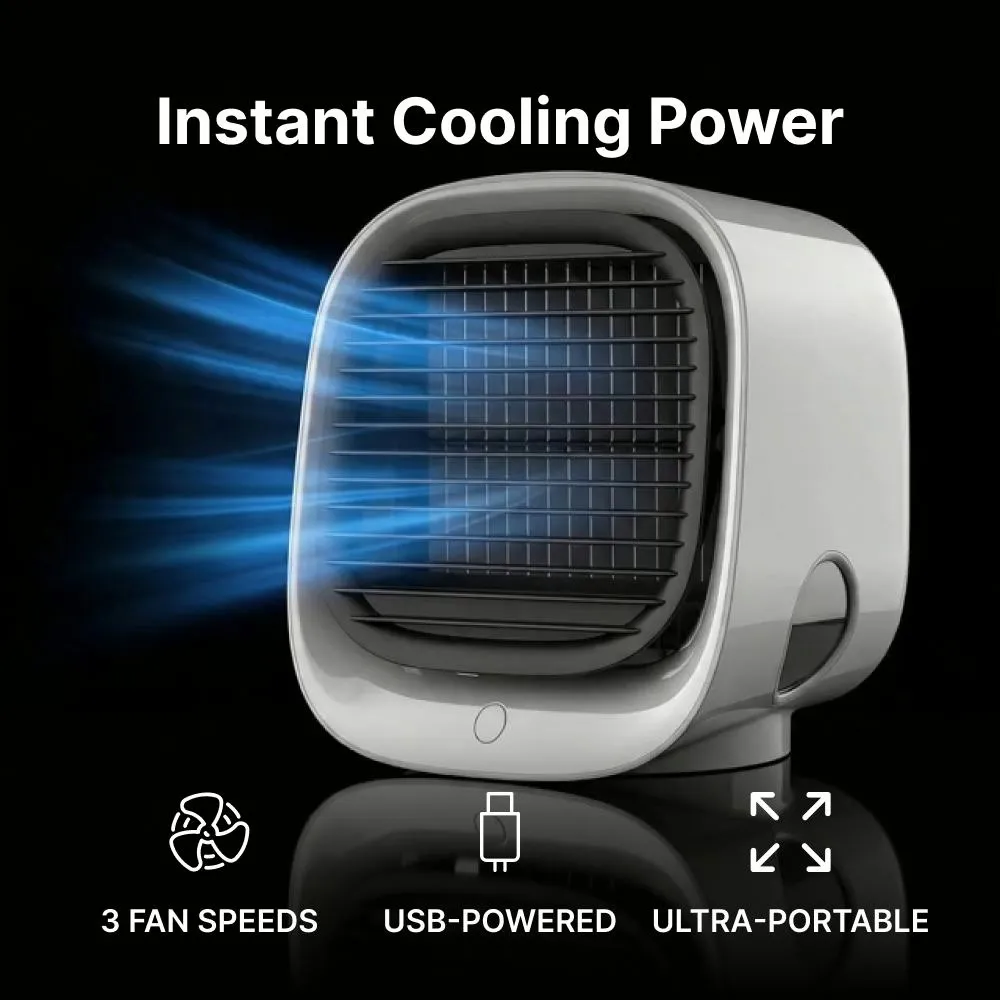
Owners rate it 4.7/5 across 1,888+ reviews, and 97% say they would recommend it. The official site is currently offering 75% OFF, and every order comes with a 30-day money-back guarantee. To be clear about what it is: AiraBreeze is an evaporative cooler for personal, small-room comfort, not a replacement for central air, and it works best in drier air with a window cracked. For the full breakdown of specs and owner feedback, read our full AiraBreeze review.
Frequently Asked Questions
How did people stay cool before air conditioning?
Mostly with shade, airflow and evaporation. People stored water in porous clay jars that stay cool as water seeps out and evaporates, hung wet mats or cloths in doorways and windows so breezes passed through them, built thick walls and courtyards, and in Persia used windcatcher towers and underground water channels to draw cooler air into buildings.
Who invented the swamp cooler?
No single inventor is undisputed. Evaporative cooling is ancient, but the modern home swamp cooler took shape in the American Southwest, especially Arizona, in the early 20th century. Accounts credit early drip-type coolers in Phoenix in the 1900s and 1910s, and in the 1930s homemade and factory-built coolers spread across Arizona, helped by published plans from the University of Arizona.
Why is it called a swamp cooler?
The nickname is usually explained by the damp, earthy smell some early coolers gave off when their wet pads were not kept clean, and by the humid feel of the air they blow. Modern coolers with clean water and maintained pads do not have that smell.
Why did evaporative coolers lose out to air conditioning?
Refrigerated air conditioning, built on the work of engineers such as Willis Carrier in the early 1900s, became affordable for homes after World War II. It cools in any climate, including humid ones, and it dehumidifies, while evaporative cooling works best in dry air. As AC prices fell, many homes switched.
Is evaporative cooling still useful today?
Yes, especially as personal, small-space cooling. A compact evaporative cooler uses only a fan, a small pump and water, so it runs at a fraction of the power of a compressor, needs no installation and can sit right where you are. It is not a replacement for central air, and it works best in drier air with a window cracked.
New here? Browse more honest home-product reviews on our Review Elite home page, or read how to use a portable air cooler for colder air.