Mini Air Cooler vs. Tower vs. Window Evaporative Cooler: Which Type Do You Need?
The Short Answer
A mini air cooler is the right type when you want to feel cool in one spot, such as your bed, desk or sofa, with no installation. A floor tower cooler suits a larger part of a room, and a window or whole-house evaporative cooler is a fixed system for cooling a home in a hot, dry climate. All of them use the same principle, evaporation, so the real choice is about how much space you need to cool and how much setup you accept. For bedrooms, home offices and renters, a personal cooler such as AiraBreeze is the simplest fit.

Search for an evaporative cooler and you get a confusing mix: palm-sized desk units, sleek floor towers, boxy units on wheels, window-mounted coolers and roof-top systems with ducts. They are all called “air coolers” or “swamp coolers,” and they all work by passing air over water. But they are built for very different spaces. Here is what each format does, who it is for and how to pick the one that fits your room, your home and your climate.
One Principle, Four Formats
Every evaporative cooler does the same thing: a fan draws warm air through a wet pad or filter, the water evaporates, and evaporation pulls heat out of the air, so cooler, slightly more humid air comes out the front. There is no refrigerant and no compressor, which is why these machines use far less power than an air conditioner and need no exhaust hose. (For the full explanation, read do evaporative air coolers actually work?)
What changes from format to format is scale: how big the pad and fan are, how much water the tank holds, whether the unit uses indoor or outdoor air, and whether it is portable or installed. That is what decides where each one shines.
1. Mini (Personal) Air Cooler
What it is: a compact cooler that sits on a desk, nightstand or side table, usually with a small tank, a few fan speeds and a simple plug-in power supply.
What it does best: cools the air in your personal zone. Pointed at you from a couple of feet away, it gives a steady, cool, gently humidified breeze while you sleep, work, read or watch TV. Because it is light, it follows you: bedroom at night, desk by day.
Where it stops: it will not bring down the temperature of a whole open-plan living area. The honest frame is “cool the person,” not “cool the house.”
Best for: bedrooms, home offices, dorm rooms, renters, RVs, hot sleepers and anyone who sits in one spot for hours.
2. Tower Air Cooler
What it is: a tall, slim floor unit, often with oscillation and a remote, and a bigger tank than a personal cooler.
What it does best: spreads cooler air across a larger part of a room, such as the seating area of a living room.
Where it stops: it takes floor space, needs to be near an outlet, is heavier to carry between rooms, and the larger tank means more water to fill, drain and clean. Placed across the room, its effect on your bed or desk is weaker than a small unit placed right next to you.
Best for: people who want to cool a bigger part of one room and do not need to move the unit often.
3. Large Portable “Swamp” Cooler
What it is: a boxy unit on wheels with a big water reservoir and a powerful fan, sold for garages, workshops, patios and large rooms.
What it does best: moves a lot of air in big, open or semi-open spaces, especially in dry heat.
Where it stops: it is loud on high, bulky indoors and adds a lot of moisture to a closed room. Most bedrooms and apartments simply do not need that much machine.
Best for: garages, workshops, covered patios and dry-climate homes with large open rooms.
4. Window or Whole-House Evaporative Cooler
What it is: a fixed system mounted in a window, on a wall or on the roof, which pulls in outdoor air, cools it through large pads and pushes it through the home, sometimes through ducts. This is the classic “swamp cooler” of the American Southwest; we told that story in the history of evaporative cooling.
What it does best: cools an entire home in a hot, dry climate using much less electricity than central air.
Where it stops: it needs installation, an open window or vent so the humid air can escape, and regular pad and water maintenance. It is not an option for most renters, and in humid regions it is a poor fit.
Best for: homeowners in dry climates who want whole-home evaporative cooling.
Evaporative Cooler Types Side by Side
| Type | Where it sits | Space it is built for | Setup | Best for |
|---|---|---|---|---|
| Mini / personal | Desk, nightstand | Your personal zone in a room | Fill and plug in | Bedrooms, desks, renters, travel |
| Tower | Floor | Part of a larger room | Fill and plug in | Living-room seating areas |
| Large portable | Floor, on wheels | Garages, patios, big rooms | Large tank to fill and drain | Workshops, dry-climate homes |
| Window / whole-house | Window, wall or roof | Whole home | Professional or DIY install | Homeowners in dry climates |
How to Pick Your Format in 4 Questions
- Where do you actually feel hot? If the answer is “in bed” or “at my desk,” you need cooling in one spot, and a personal unit placed close to you beats a big unit across the room.
- Do you rent or own? Renters, dorm residents and people in shared housing can rarely install a window or roof unit. Portable formats need no permission and no tools.
- How humid is your air? All evaporative coolers work best in dry air. In dry heat, or in rooms dried out by winter heating, the effect is strongest. In very humid weather, keep expectations modest and run the unit with a window cracked.
- How much upkeep will you do? Bigger tanks and pads mean more water, more cleaning and more mold risk if you forget. A small tank that you refill and rinse often is the easiest to keep fresh. Our cleaning and storage guide shows the routine.
For most people reading this blog, the honest answers to those questions point the same way: the heat problem lives in one room, usually the bedroom or home office, and the person wants cooler air without an installation project. That is exactly the case the mini format was designed for. Our earlier guide, how to choose a portable air cooler, then helps you compare specific units within that format.
Our Recommendation: AiraBreeze
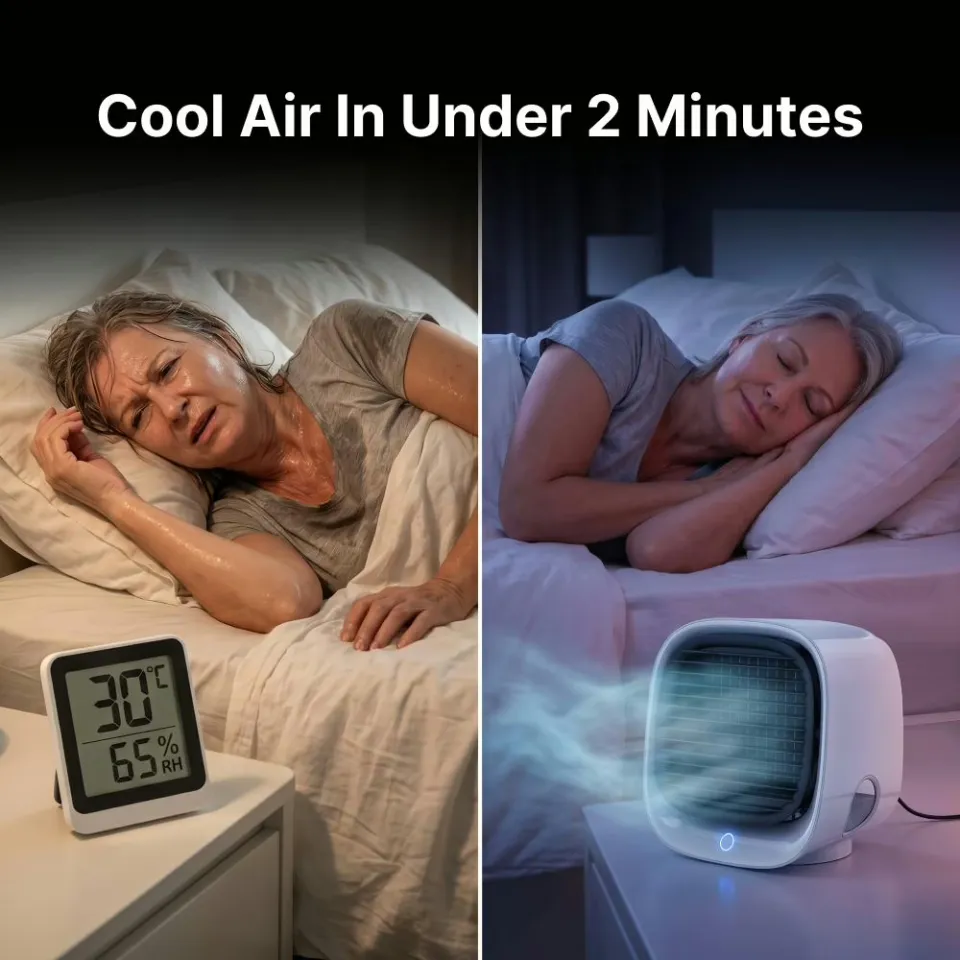
If your heat problem is the space you are in, the bed at 2 a.m. or the desk at 2 p.m., the mini format is the right call, and AiraBreeze is the personal air cooler we recommend. It is a compact, lightweight evaporative cooler that cools, filters and humidifies the air around you, rated for spaces up to 215 sq ft, with no installation at all: fill the tank, plug it in, press the button.
- Noticeable cooling in about 90 seconds: no waiting for a whole room to come down.
- Up to 8 hours per fill: one fill covers a night's sleep or a work day.
- 3 fan speeds: low is quiet enough to sleep next to.
- Filters and humidifies as it cools: a gentler feel than dry, recycled AC air.
- Light enough to carry with one hand: bedroom at night, desk by day, RV on the weekend.
- Add ice for extra-cool air: drop ice into the tank on the hottest days.
Owners rate it 4.7/5 across 1,888+ reviews, and 97% say they would recommend it. The official site currently offers 75% OFF, and every order is covered by a 30-day money-back guarantee. It is a personal and small-room cooler, not a replacement for central air, and like every evaporative cooler it performs best in drier air. Read our full AiraBreeze review for specs and owner feedback.
Frequently Asked Questions
Do mini air coolers actually work?
Yes, for the job they are built for. A mini air cooler uses evaporation to cool the air coming out of it, so you feel a cooler, gently humidified breeze when it is pointed at you from a desk or nightstand. It cools your personal space, not a whole house, and like every evaporative cooler it works best in drier air.
What is the difference between a mini air cooler and a tower air cooler?
Size and reach. A mini cooler sits on a desk or nightstand and cools the space around one person. A tower cooler stands on the floor, has a larger tank and a taller airflow, and is meant to cover a larger part of a room, but it is bigger, heavier and needs floor space and a nearby outlet.
Is a window evaporative cooler better than a portable one?
A window or whole-house evaporative cooler moves much more air and pulls in fresh outdoor air, so it can cool a larger space in a hot, dry climate. It needs installation, a window or roof opening and regular pad maintenance. A portable cooler needs no installation and is easier for renters, bedrooms and offices.
What size evaporative cooler do I need for a bedroom?
For a typical bedroom where you mainly want to feel cool in bed or at a desk, a personal (mini) cooler aimed at you is usually enough. AiraBreeze, for example, is rated for spaces up to 215 sq ft. If you want to cool a large open living area, a floor tower or a fixed window unit is the better match.
Do evaporative coolers work in humid weather?
They work less well. Evaporative cooling depends on dry air absorbing moisture, so in very humid weather the cooling effect is smaller and the air can feel damp. They shine in dry heat and in rooms dried out by indoor heating, which is why many people also use a personal cooler in winter.
Can I put ice in a mini air cooler?
Many personal coolers, including AiraBreeze, let you add ice or cold water to the tank for a colder airflow on the hottest days. Follow the instructions for your model and keep the tank clean.
New here? Browse more honest home-product reviews on our Review Elite home page, or compare appliance types in portable cooler vs. AC vs. fan.