Why Is My Room So Stuffy? The 5 Problems That Usually Come Together (and How to Fix the Whole Package)
The Short Answer
A room feels stuffy when the air stops moving and stops being replaced, and that almost never happens alone: heat, the wrong humidity, stale air and restless sleep tend to arrive as a package. The EPA lists “stuffy air” as a sign of inadequate ventilation and recommends indoor humidity of 30 to 50 percent. Fix the package in order: swap the air, get it moving, bring humidity into range, then cool the spot where you sit or sleep, which is exactly what a personal cooler like AiraBreeze is built to do.
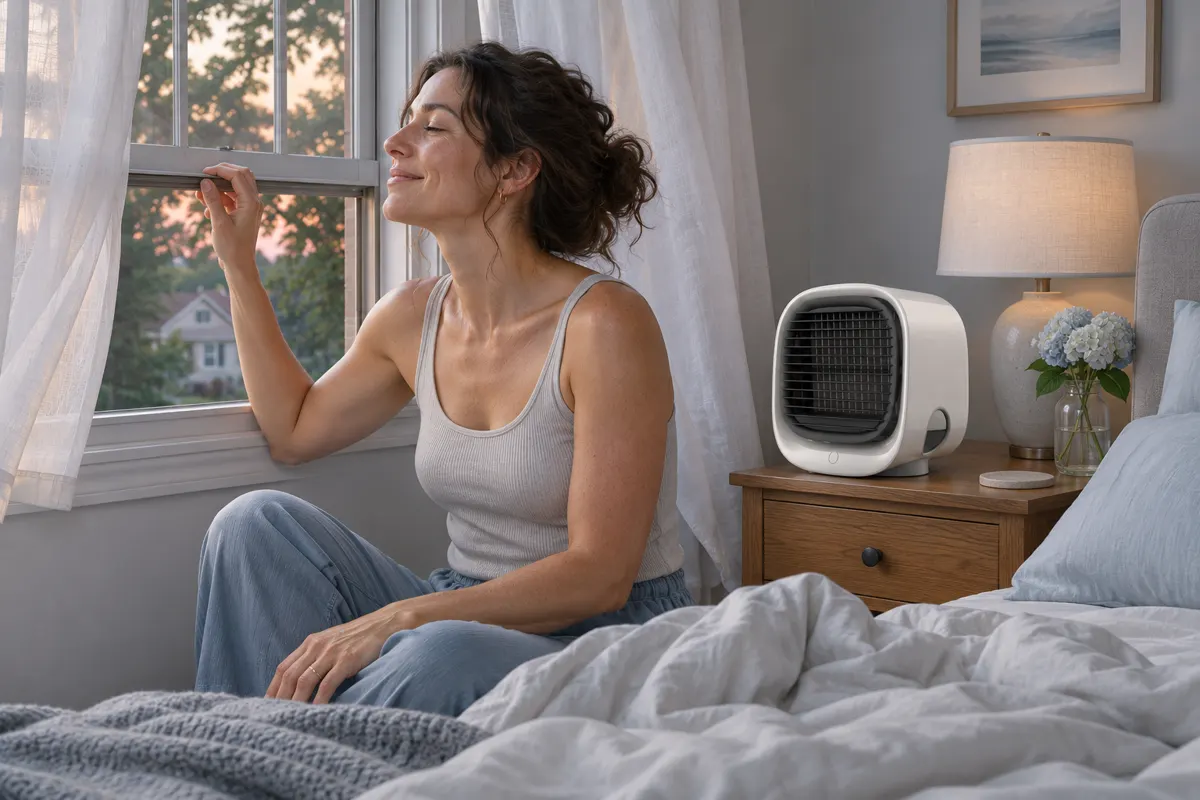
You walk into the bedroom and the air feels heavy, warm and somehow “used.” You open the window, it gets better for twenty minutes, then the closeness comes back. That is because stuffiness is rarely a single fault you can switch off. It is a cluster of related problems that feed each other. Below are the five that most often travel together, why they show up as a team, and a simple order to fix them so the room stays fresh instead of just feeling better for a moment.
What “Stuffy” Actually Means
“Stuffy” is not a technical term, but building-health guidance uses it consistently. The U.S. Environmental Protection Agency’s Care for Your Air guide tells residents to watch for “signs of inadequate ventilation, such as stuffy air, moisture condensation on cold surfaces, or mold and mildew growth.” Its introduction to indoor air quality adds that when too little outdoor air comes in, pollutants from indoor sources can build up, and that high temperature and humidity can increase concentrations of some of them.
In plain English: a stuffy room is a room where warm, moist, already-breathed air is sitting still. Each of those words points to a separate problem, and they reinforce one another.
The 5 Problems That Come Together
1. Still air (no air exchange)
This is the root of most stuffiness. Closed doors, a supply vent hidden behind a dresser, windows sealed for the season, or a bedroom at the end of a duct run all mean the same air stays put. People and pets breathe it, cooking and showers add moisture to it, furniture and cleaning products add odors to it. Without exchange, it just accumulates.
2. Heat that builds up in one room
Bodies, electronics, lamps and sun through a window all add heat. In a room with little air exchange, that heat has nowhere to go, so the room drifts warmer than the rest of the house. That is why stuffy and hot so often appear in the same sentence, and why upstairs rooms are classic offenders (we covered the causes in why is my upstairs so hot?).
3. Humidity outside the comfort range
The EPA recommends keeping indoor humidity between 30 and 50 percent. Above that, warm air feels thick and clammy and sweat evaporates poorly, so you feel hotter than the thermostat says. Below it, which is common in winter when the heat runs all day, the air feels dry, your throat and nose feel scratchy, and many people describe that as stuffy too. Same word, opposite fix, so it pays to measure before you act.
4. Stale air and lingering odors
Air that is not replaced keeps whatever is added to it: breath, cooking smells, laundry drying on a rack, a litter box, scented candles. The result is the “used air” feeling. Some people use an inexpensive carbon-dioxide monitor as a rough indicator of how well a room is ventilated, since CO2 rises when air is not exchanged; the EPA notes such readings can give information about ventilation but should be interpreted carefully, so treat the number as a nudge to open a window, not a diagnosis.
5. Restless, warm sleep
The bedroom is where the package hurts most. A closed door at night, two people breathing for eight hours and a warm duvet create the stuffiest conditions in the house. Many people sleep better in a cool room (see the best temperature for sleeping), so a close, warm bedroom often means tossing, kicking off covers and waking up groggy.
Why These Problems Feed Each Other
| Problem | Why it shows up with the others | What to do |
|---|---|---|
| Still air | No exchange means heat, moisture and odors all stay in the room | Open door + window 5–10 min; unblock the vent |
| Heat build-up | Trapped air holds the heat from people, devices and sun | Shade the window by day; cool the spot you use |
| Humidity too high | Showers, cooking and breathing add moisture that cannot leave | Ventilate, use exhaust fans, aim for 30–50% |
| Humidity too low (winter) | Heated air dries out; dry air feels scratchy and close | Add gentle moisture, keep under 50% |
| Stale air / odors | Sources keep adding to air that is never replaced | Remove the source, then ventilate |
| Warm, poor sleep | All of the above peak at night with the door closed | Air swap before bed + cool air across the bed |
The pattern is a loop: still air lets heat and moisture build, humid air feels hotter, a hot room makes you shut the door against the rest of the house, and the shut door means even less air exchange. Fixing only one link (say, turning down the thermostat) helps a little; breaking the loop at two or three points is what makes the room feel fresh.
How to Fix the Whole Package, in Order
- Swap the air first. Open the bedroom door and a window for 5 to 10 minutes, ideally on opposite sides so air can flow through. This is the single fastest reset.
- Find the blocked vent. Make sure the supply register is not under a bed or behind a dresser, and that the door has a gap underneath for return air.
- Measure humidity. A $10 hygrometer tells you whether you are fighting damp air (above 50%) or dry air (below 30%), which changes the next step.
- Remove the moisture and odor sources. Run the bathroom exhaust fan during and after showers, dry laundry elsewhere, and empty bins and litter boxes regularly.
- Keep the air moving. Moving air feels fresher and cooler on the skin. A fan or personal cooler aimed across where you sit or sleep makes a stuffy room tolerable even before it is fully fixed.
- Cool the spot, not the house. If one room or one bed is the problem, cool that spot directly instead of chilling the whole home (our if-then guide to cooling a hot room helps you pick the right tool).
For the bedroom specifically, a quick air swap 30 minutes before bed plus gentle cool air across the pillow solves most nights. We list more warning signs in 7 signs your bedroom is too hot to sleep.
Where a Personal Cooler Fits (and How to Use It Right)
A personal evaporative cooler like AiraBreeze tackles three links in the loop at once: it moves air across you, cools the space around you, and filters the air it pulls in. In winter, when heated air drops below 30 percent humidity, its light humidifying effect is a bonus rather than a drawback, a point we explain in can an evaporative cooler be used as a humidifier?
Two tips make it work best in a stuffy room. First, keep a little fresh air coming in, such as the door ajar or a window cracked, because evaporative cooling works best when the air around it can be replaced. Second, if your hygrometer already reads above 50 percent, ventilate first and use the cooler with fresh air flowing, so you get the cooling and air movement without adding to damp air.
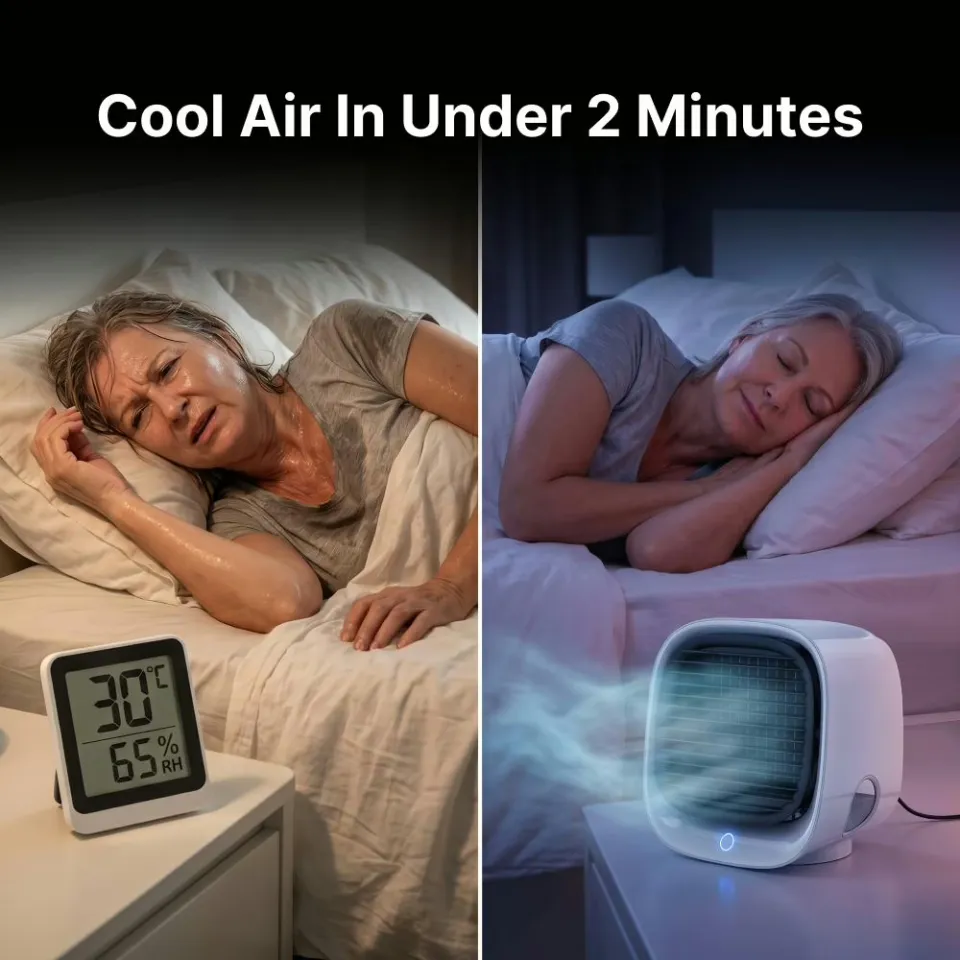
Our Recommendation: AiraBreeze
Once you have swapped the air and checked the humidity, the piece that makes a stuffy room feel genuinely comfortable is steady, cool air where you are. AiraBreeze is the personal evaporative cooler we recommend for exactly that job: a compact unit that cools, filters and humidifies the air around you, rated for spaces up to 215 sq ft, with nothing to install. Fill the tank, plug it in, press the button.
- Noticeable cooling in about 90 seconds: the close, heavy feeling eases almost right away.
- Up to 8 hours per fill: enough for a full night with the bedroom door closed.
- 3 fan speeds: low is quiet enough to sleep next to.
- Filters the air it moves: a fresher feel around your desk or pillow.
- Add ice for extra-cool air: a colder first blast on warm evenings.
- Light and portable: nightstand at night, desk by day, guest room when needed.
Owners rate it 4.7/5 across 1,888+ reviews, and 97% say they would recommend it. The official site currently offers 75% OFF, and every order is covered by a 30-day money-back guarantee. Read our full AiraBreeze review for specs and owner feedback.
Frequently Asked Questions
Why is my room so stuffy even when it is not hot?
Stuffiness is mostly about air that is not moving or being replaced. A closed door, a blocked vent, several people or pets breathing in a small room, or moisture from showers and drying laundry can make a room feel close and heavy even at a normal temperature. The EPA lists stuffy air as one of the signs of inadequate ventilation.
How do I make a room less stuffy fast?
Open the door and a window for 5 to 10 minutes to swap the air, run a fan or personal cooler so the air moves across you, remove obvious moisture sources such as wet towels, and check that the supply vent is not blocked by furniture. Then keep a little air exchange going instead of sealing the room again.
What humidity should a bedroom be?
The EPA recommends keeping indoor humidity between 30 and 50 percent. Above that range a room tends to feel heavy and warm; below it, heated winter air can feel dry and scratchy, which many people also describe as stuffy.
Can a stuffy room affect sleep?
Many people sleep worse in a warm, close room, because a cool, comfortable bedroom helps the body settle into sleep. Freshening the air and lowering the temperature around the bed are two of the easiest changes to try. If poor sleep continues for weeks, talk to your doctor.
Does a personal evaporative cooler help a stuffy room?
It helps with three parts of the package: it moves air across you, cools the space around you and filters the air it pulls in, and in dry heated winter air its gentle humidifying effect is a plus. For best results, keep a little fresh air coming in, for example a door or window slightly open, especially when the air is already humid.
New here? Browse more honest home-product reviews on our Review Elite home page, or see how cooling options compare in portable cooler vs. AC vs. fan.